News

Case Study: 1000V DC Combiner Box 6 In 2 Out Cuts Solar Array Costs by 15%

2026-09-07 0 Leave me a message

Case Study: 1000V DC Combiner Box 6 In 2 Out Cuts Solar Array Costs by 15%

Customer Background

A mid-sized solar engineering, procurement, and construction (EPC) company located in southern Spain manages utility-scale ground-mounted installations across the Iberian Peninsula. With 200 employees and an annual pipeline of 80 MW, the company routinely works on projects where land area, cable routes, and inverters are arranged in tight geographies.

The business had won a contract to repower and expand an existing 1.6 MW solar plant by adding 0.8 MW of new capacity. The plant no longer met the stricter safety and performance needs of today's DC equipment, so the old array boxes and cabling had to be replaced. The engineering team looked for a solution that would lower balance-of-system costs while keeping installation safe and stoppage minimal.

Challenges and Pain Points

The original solar plant used 600 V rated combiner boxes paired with a 380 V inverter line. Every four string circuits were combined into one feeder, requiring long low-voltage cable runs. On the new section, the team planned to use 1000 V solar modules and a 1000 V-capable central inverter to reduce cable cross sections and improve inverter efficiency.

The problem was that standard 600 V combiner boxes could not accept the higher string voltages. The project managers, therefore, needed a combiner box capable of handling 1000 V DC while feeding two independent inverter inputs. The existing cable trays and trenches could not afford significant new paths, so the project needed a compact box that allowed six strings to enter and two group outputs to leave, limiting new cable pulls and shortening feeder lengths.

One more headache came from maintenance. In the old installation, short circuits or string failures were isolated with slow mechanical fuses. That caused time-consuming fault tracing and unplanned generation losses every few months. With the plant repowering, the EPC was looking to avoid those losses.

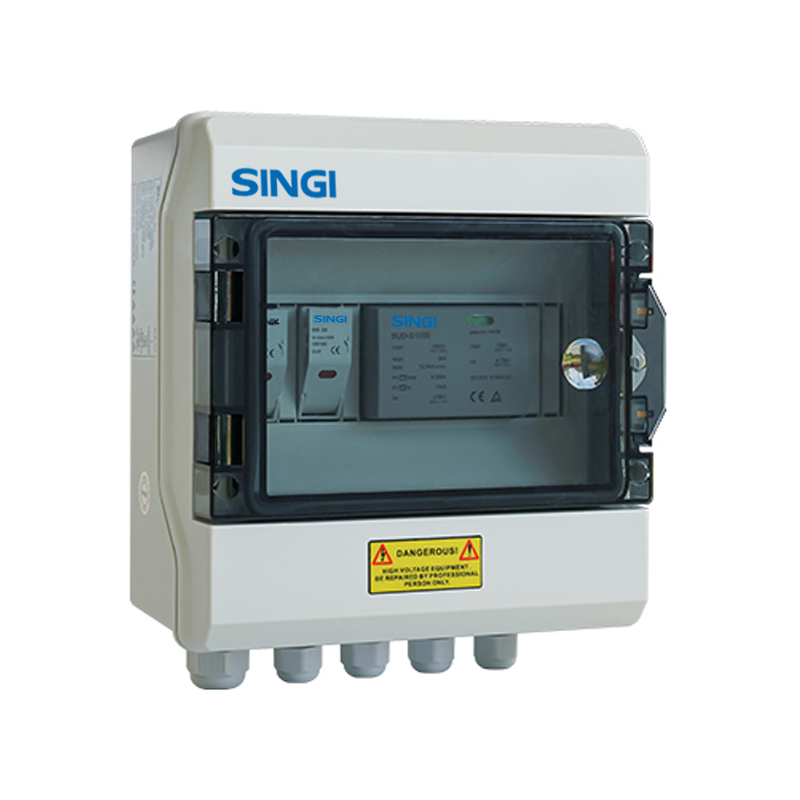
Why the Soutya 1000V DC Combiner Box 6 In 2 Out MCB Type?

The engineering team evaluated three alternatives: standard home-grown junction boxes with fuse holders, imported high-voltage combiner boxes offered by a module partner, and the Soutya 1000V DC combiner box. The first solution was ruled out because field-built boxes lack proper IP-rated enclosures and DC-rated circuit breakers. The second option was more expensive and had lead times of more than ten weeks.

The Soutya 1000V DC combiner box stood out because of three product features that matched the project requirements exactly.

  • Six DC inputs and two outputs, giving the design the ability to feed two separate inverter MPPT inputs without an added sub-panel.
  • MCB type protection instead of fuse holders. This allowed easy reset and troubleshooting with no spare fuses needed.
  • Rated for 1000 V DC per the project’s string voltage layout, so the box could be placed close to the array and still comply with the plant’s safe voltage thresholds.

In addition, the box came from a local supplier with a short lead time of two weeks. Purchase managers compared the cost of the Soutya unit with the competition and calculated a 22% saving per enclosure, before considering wiring and labor savings.

Implementation and Application Process

The project delivered the complete repowering and expansion during a three-month construction window., the installation of the 1000V DC combiner boxes took six days across ten new and replacement arrays.

The team followed a clear sequence:

  1. After fixing the mounting racks, the technicians installed the DC string lines to the combiner box positions with a voltage test at 1000 V DC.
  2. Each Soutya 1000V DC combiner box was mounted to the rack with its neutral and conduit entries facing down, protecting the MCB compartment from rain intrusion.
  3. Six string conductors were terminated inside each box and torque-checked according to the label values.
  4. The two output feeds were routed to the inverter’s MPPT input sections, and the DC breakers were engaged only after all connections were verified.

A key difficulty arose on steel-trimmed roofs where the grounding plate of the enclosure could not be bolted. The manufacturer’s presale engineer suggested using a grounding lug kit with one-hole compression terminals. The site crew applied the recommended crimping tool and passed a continuity test. That eliminated a potential delay of two days.

Quantified Results

After commissioning and a full summer operating season, the EPC compared the repowered plant’s performance against the older section operating with the same inverter class.

  • Cable copper weight per string feeder dropped by 35%, because the 1000 V strings ran at a higher voltage and lower current while maintaining the same voltage drop limit.
  • The overall balance-of-system materials cost for the added 0.8 MW portion was reduced by 15% compared with a baseline 600 V design, including the effective price of the Soutya 1000V DC combiner box.
  • Fault reset time went from an average of 55 minutes to 8 minutes thanks to the MCB-type breakers and the easy-to-access 6-in-2-out arrangement.
  • Generation availability improved 3.4% during the first three months compared to the historical performance of the older array boxes with fuse-based protection.

Because fewer sub-feeders were needed, the trenching length was also shortened by 18%. That saved a week of excavation and reduced the compaction work before the inverters were mounted.

Customer Perspective

The head of electrical engineering at the EPC stated:

“The 1000V DC combiner box gave us the dual output layout we needed without special fabrication. We have cut our material costs and, more, when a string trips now the crew restores it in minutes than spending hours looking for a blown fuse.”

The plant owner echoed that view, noting the new configuration allowed future expansion without replacing the original DC infrastructure.

Lessons and Recommendations

For other EPC companies planning similar high-voltage DC solar work, three points stand out:

  • Choose a combiner box with the right number of inputs and outputs for the inverter topology before starting layout. A 6-in-2-out unit can greatly reduce feeder counts and secondary distribution panels.
  • MCB-based protection is worth the slightly higher initial cost, because operational downtime is underestimated in a business case. One avoided half-day outage can pay for the extra.
  • Confirm grounding and IP protection requirements with the supplier before shipment. A small detail like a grounding kit can influence installation speed and reliability, for elevated roof sites.

If the project were redone, the team would order pre-drilled gland kits and labeled conductor marker tubes at the same time as the boxes. That simple change would cut close-out inspection time by another two days across the whole plant.

Industry Standards References

The applied installation and selection of the 1000V DC combiner box follow the relevant IEC requirements: IEC 62548:2016 for PV array design and structural requirements, and IEC 61643-11:2011 for surge protection coordination at the DC side.

1000V DC Combiner Box 6 In 2 Out MCB type

Related News
Leave me a message
X
We use cookies to offer you a better browsing experience, analyze site traffic and personalize content. By using this site, you agree to our use of cookies. Privacy Policy
RejectAccept