News

Why choose a 1000V DC combiner box with MCB for solar arrays

2026-06-22 0 Leave me a message

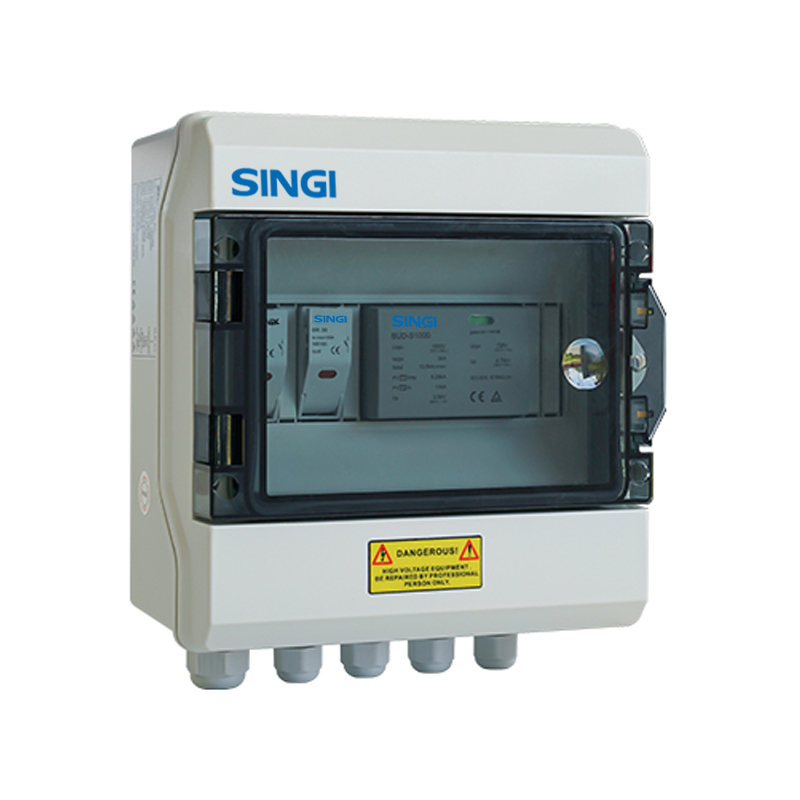
A 1000V DC combiner box with MCB (miniature circuit breaker) protection is a compact solution for combining two PV strings into one output while providing overcurrent protection. This article explains the technical advantages, selection criteria, and application scenarios for the 1000V DC combiner box 2 in 1 out MCB type from Soutyaele, a site focused on reliable electrical protection components.

This guide covers the key aspects of 1000V DC Combiner Box 2 In 1 Out MCB type, including its features, selection criteria, applications, and industry best practices.

What is a 1000V DC combiner box 2 in 1 out?

A combiner box aggregates multiple PV string inputs into a single output. The 2 in 1 out configuration accepts two string inputs and delivers one combined circuit to the inverter. The 1000V DC rating matches standard commercial PV systems. This model uses an MCB as the overcurrent protection device instead of fuses. The MCB reset ability reduces maintenance costs compared to replaceable fuses.

Why do PV arrays need a combiner box with MCB protection?

PV arrays operate under high DC voltage and variable current. Faults such as short circuits or reverse currents can damage modules and wiring. A combiner box with an MCB provides a resettable overcurrent protection. According to IEC 62548:2016, each string must be protected against overcurrent. The MCB type allows quick restoration after a trip, which is useful for string troubleshooting. For large systems, modular combiner boxes with MCBs reduce downtime.

How does the MCB type differ from fuse-based combiner boxes?

FeatureMCB TypeFuse Type
Reset after tripManual resetReplaceable fuse
Response time ( <10 ms)Depends on fuse curve
Current ratingUp to 63A per poleUp to 32A typical
Operating voltage1000V DC1000V DC (with proper fuse)
Space requirementCompactCompact
Cost per protectionHigher initialLower initial

The MCB provides convenience for systems where frequent protection resets are expected. Fuse types may be cheaper for remote or fixed installations where replacement is acceptable.

What technical specifications should buyers check for 1000V DC combiner boxes?

When selecting a 1000V DC combiner box 2 in 1 out MCB type, verify these parameters:

  • Rated voltage: Must be at least the system maximum voltage ( 1000V DC).
  • Rated current per string: Ensure MCB rating matches the string short-circuit current (Isc) with margin.
  • Breaking capacity: The MCB must be able to interrupt the maximum possible fault current. IEC 60947-2 defines DC breaking capacity requirements. For 1000V DC, look for at least 6kA to 10kA.
  • IP rating: Outdoor installations should have IP65 or better for dust and water ingress protection.
  • Number of inputs: 2 in 1 out is suitable for two strings. Larger systems may need more inputs.
  • Certifications: Check for TUV, CE, or UL listing relevant to your market.

Note: The MCB in a combiner box must be DC-rated. AC MCBs do not extinguish DC arcs reliably. Always use a certified DC MCB for 1000V systems.

Which applications are best suited for a 2 in 1 out configuration?

A 2 in 1 out combiner box is ideal for small commercial or residential rooftop systems with two strings. It works where space is limited and each string requires separate overcurrent protection before combining. The compact form fits inside a junction box near the array. It also serves as a combiner for battery storage systems that have two parallel battery banks. For larger arrays, multiple units can be cascaded or a multi-input combiner box is needed.

How to ensure reliable operation of a 1000V DC combiner box?

Installation must follow local electrical codes and the manufacturer’s instructions. Use correctly sized cables with proper DC-rated connectors. Ensure the enclosure is grounded and sealed against moisture. Periodically test the MCB by tripping it manually to confirm mechanical function. In high-humidity environments, consider units with anti-corrosion coatings on terminals. Surge protection devices (SPDs) can be added inline for additional lightning protection, though not included in this basic version.

FAQ

Can I use a 1000V DC combiner box with MCB for 1500V systems?

No. The 1000V DC rating is the maximum operating voltage. Using it on a 1500V system would exceed the insulation coordination and MCB voltage rating, leading to arc flash risk.

What is the difference between a combiner box and a junction box?

A combiner box includes overcurrent protection and SPDs, while a junction box is a simple pass-through enclosure. Combiner boxes are used to aggregate multiple strings; junction boxes connect conductors without protection.

How do I choose between 2 in 1 out and 4 in 1 out combiner boxes?

Choose based on the number of strings in your array. A 2 in 1 out handles two strings. If you have more, use a 4 in 1 out or higher count, or use multiple 2 in 1 boxes in a combiner cabinet.

Is the MCB replaceable if it fails?

Yes, the MCB is a field-replaceable component. Ensure the replacement has the same or higher DC rating and breaking capacity.

For a reliable 1000V DC combiner box 2 in 1 out MCB type, review the specifications and order from Soutyaele product page. This model meets the basic protection requirements for small solar arrays.

References

[1] IEC 62548:2016. Photovoltaic (PV) arrays – Design requirements [S]. 2016.

[2] IEC 60947-2:2020. Low-voltage switchgear and controlgear – Part 2: Circuit-breakers [S]. 2020.

[3] UL 1699B:2018. Photovoltaic (PV) DC Arc-Fault Circuit Protection [S]. 2018.

1000V DC Combiner Box 2 In 1 Out MCB type

Related News
Leave me a message
X
We use cookies to offer you a better browsing experience, analyze site traffic and personalize content. By using this site, you agree to our use of cookies.Privacy Policy
RejectAccept