News

How does a 1000V DC combiner box with MCB protect your PV system

2026-06-23 0 Leave me a message

A 1000V DC combiner box 1 in 1 out MCB type is a compact protection unit designed for single PV string applications. It combines overcurrent protection and isolation in one enclosure, simplifying installation and reducing costs. This article explains its role in solar systems, key selection criteria, and why MCB-based designs outperform fuse-based alternatives. For a full lineup of combiner boxes, visit the combiner box category on Soutyaele.

  • What is a 1000V DC combiner box 1 in 1 out MCB type?
  • Why use an MCB instead of a fuse in a DC combiner box?
  • How does the MCB improve safety in 1000V DC systems?
  • Which technical parameters should buyers prioritize?
  • How to choose the correct combiner box for a solar project?
  • FAQ

This article covers the definition, advantages, safety mechanisms, parameter selection, and application of a 1000V DC combiner box with MCB. It also includes a FAQ section and references to international standards.

Note: Proper selection and installation of 1000V DC Combiner Box 1 In 1 Out MCB type is critical for system safety and performance. Always refer to the manufacturer specifications and relevant industry standards.

What is a 1000V DC combiner box 1 in 1 out MCB type?

A combiner box is an electrical enclosure that consolidates the output of PV strings and provides overcurrent protection. The 1000V DC combiner box 1 in 1 out MCB type accepts one string input and delivers a single output to the inverter. It contains a miniature circuit breaker (MCB) rated for 1000V DC, which protects the cable and downstream equipment from overloads and short circuits. Designed for outdoor or indoor use, the box is rated IP65 and includes cable glands for secure connections. This configuration is common in small residential or commercial systems where only one string is used per combiner. Products from Soutyaele comply with IEC 62548 for PV array design requirements.

Why use an MCB instead of a fuse in a DC combiner box?

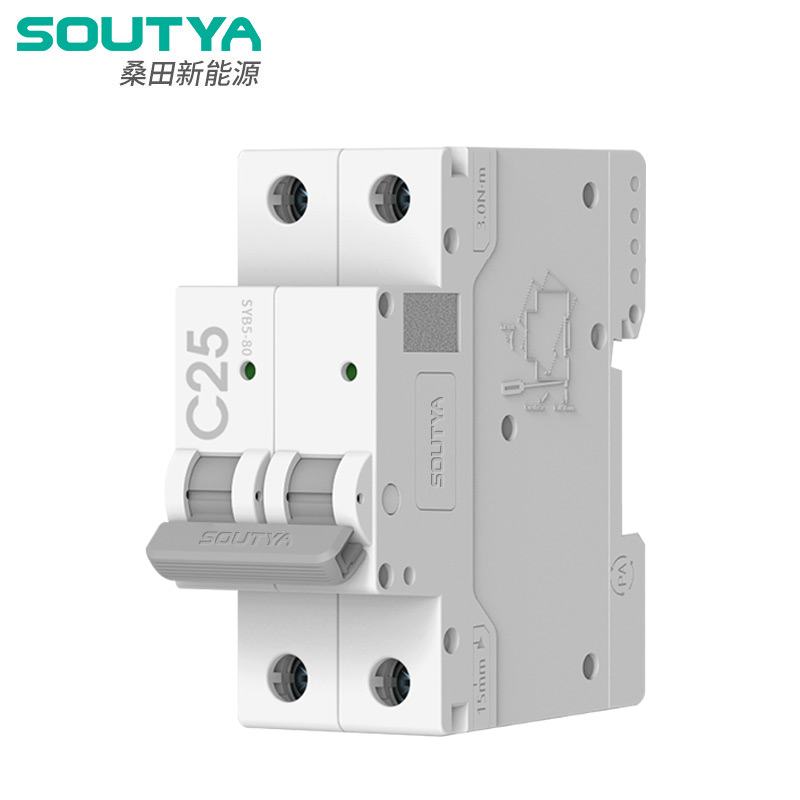
MCBs offer several advantages over traditional fuses in DC combiner boxes. Unlike a fuse, which must be replaced after each fault, an MCB can be reset manually or automatically. This reduces downtime and maintenance costs, in remote installations. MCBs also provide more precise overcurrent protection with defined trip curves (B, C, D) suitable for PV applications. For 1000V DC systems, MCBs are designed with special arc-extinction chambers to safely interrupt DC arcs, which do not self-extinguish like AC arcs. Fuses, while cheaper, lack the ability to signal a trip and may require spares. The 1000V DC combiner box with MCB from Soutyaele adheres to GB/T 14048.2 circuit breaker standards, ensuring reliable operation.

How does the MCB improve safety in 1000V DC systems?

The MCB in a 1000V DC combiner box uses a combination of thermal (overload) and magnetic (short-circuit) protection mechanisms. Under overload conditions, a bimetallic strip heats up and trips the breaker after a delay. For short circuits, an electromagnet instantaneously triggers the trip mechanism. In DC systems, the arc drawn when contacts open is more persistent due to the lack of a zero-crossing current. Therefore, the MCB must have a suitable DC rating and arc-quenching design. Soutyaele's combiner box incorporates an MCB with high breaking capacity ( 6-10kA) to safely clear faults., the enclosure provides a degree of arc containment, protecting personnel and nearby equipment. This design complies with IEC 61643-11 surge protection requirements when combined with external SPDs.

Which technical parameters should buyers prioritize?

When selecting a 1 in 1 out MCB combiner box, focus on these five parameters:

  • Rated DC voltage: Must be equal to or greater than the maximum system voltage (e.g., 1000V for most commercial PV arrays).
  • Rated current: The MCB's current rating should be 1.25 times the string short-circuit current (Isc) at standard test conditions.
  • Breaking capacity: The maximum fault current the MCB can interrupt. For 1000V DC, 6kA is typical; verify with your system's available fault current.
  • Ingress protection (IP): At least IP65 for outdoor installations to resist dust and water jets.
  • Operating temperature range: Ensure the combiner box functions in your site's ambient conditions, -25°C to +55°C.

Also check the enclosure material (e.g., UV-stabilized polycarbonate or metal) and cable entry type (MC4 compatible). Soutyaele provides detailed datasheets for each model.

How to choose the correct combiner box for a solar project?

Follow these steps to select the right 1000V DC combiner box for a single-string PV system:

  1. Calculate the string open-circuit voltage (Voc) under lowest ambient temperature to ensure it does not exceed 1000V.
  2. Determine the short-circuit current (Isc) of the module and multiply by the number of modules in parallel (here, one string). Size the MCB at 1.25× Isc.
  3. Consider voltage drop and cable length; the combiner box should be placed close to the inverter if possible.
  4. Choose between surface-mount or flush-mount enclosure based on installation location.
  5. Verify certifications: look for TUV, CE, or UL marks. Soutyaele's combiner box meets IEC 62548 and IEC 61643-11 guidelines.

For warranty and support, select a supplier with technical documentation and responsive service. Soutyaele offers application notes and after-sales assistance.

FAQ

  • Q: Can this combiner box be used for multiple strings? A: No, this is a 1 in 1 out design intended for a single PV string. For multiple strings, use a multi-string combiner box with multiple MCBs.
  • Q: Is an MCB better than a fuse in a DC combiner box? A: For 1000V DC, an MCB offers resettable protection and clear trip indication, reducing maintenance. Fuses are cheaper but require replacement after each fault.
  • Q: What is the typical breaking capacity of the MCB? A: Most 1000V DC MCBs have a breaking capacity of 6kA to 10kA. Confirm with the datasheet for the specific model from Soutyaele.
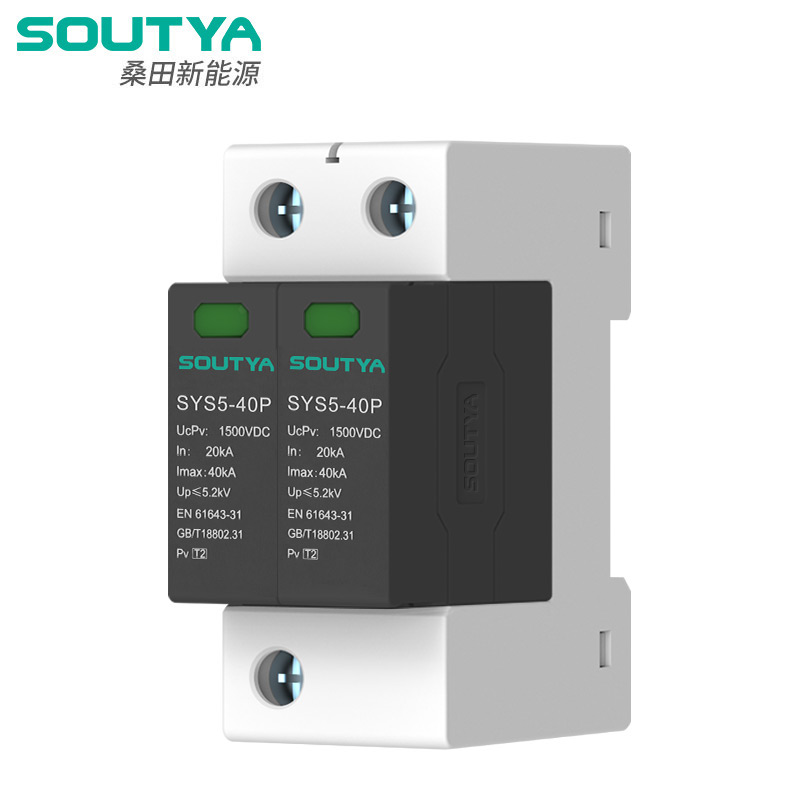
  • Q: Does the combiner box include surge protection? A: This basic model does not include an SPD. For surge protection, consider a combiner box with integrated SPD or add an external Type 2 SPD.
  • Q: What certifications does Soutyaele's combiner box have? A: It complies with IEC 62548 for PV arrays, IEC 61643-11 for SPD coordination, and the MCB meets GB/T 14048.2.

Selecting the right combiner box is essential for a reliable PV installation. The 1000V DC combiner box 1 in 1 out MCB type from Soutyaele offers a balance of safety, simplicity, and cost-effectiveness. For detailed specifications and ordering, visit the product page.

1000V DC Combiner Box 1 In 1 Out MCB type

References

  • IEC 62548:2016. Photovoltaic (PV) arrays — Design requirements [S]. 2016.
  • IEC 61643-11:2011. Low-voltage surge protective devices — Part 11: SPDs connected to low-voltage power systems [S]. 2011.
  • GB/T 14048.2-2020. Low-voltage switchgear and controlgear — Part 2: Circuit breakers [S]. 2020.
Related News
Leave me a message
X
We use cookies to offer you a better browsing experience, analyze site traffic and personalize content. By using this site, you agree to our use of cookies.Privacy Policy
RejectAccept