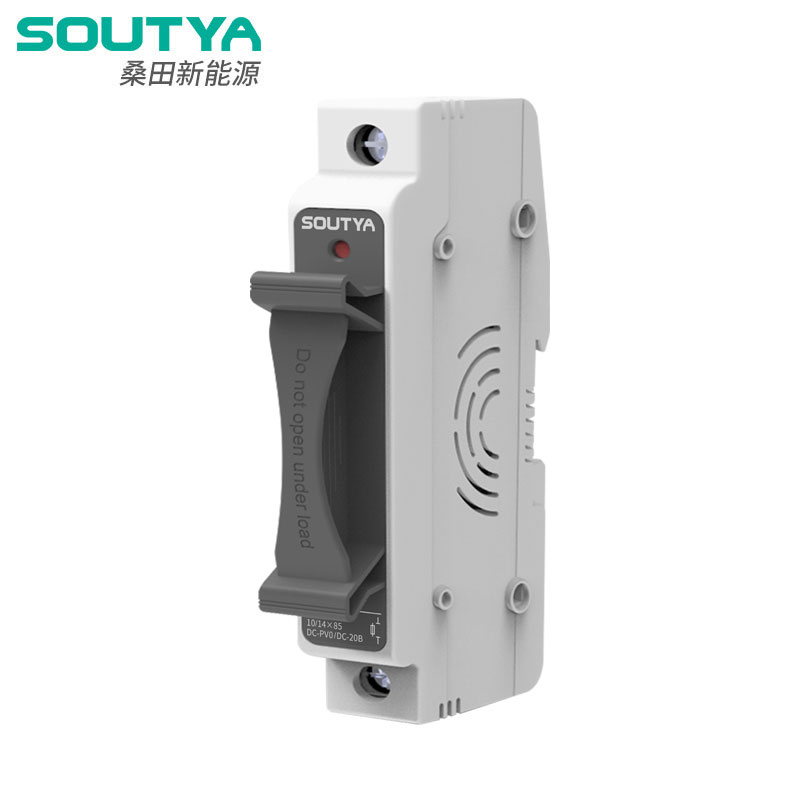
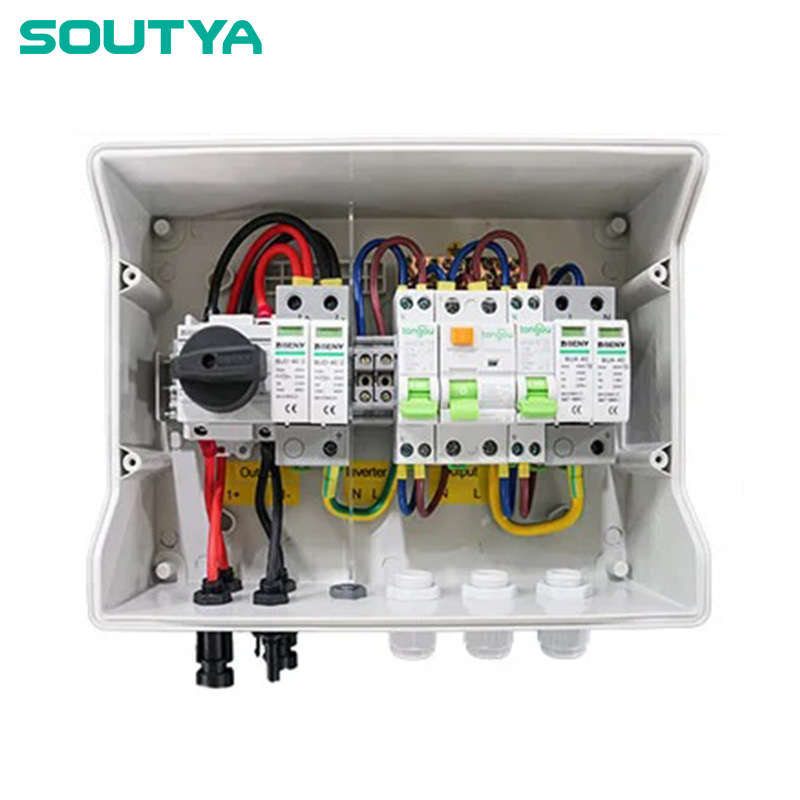
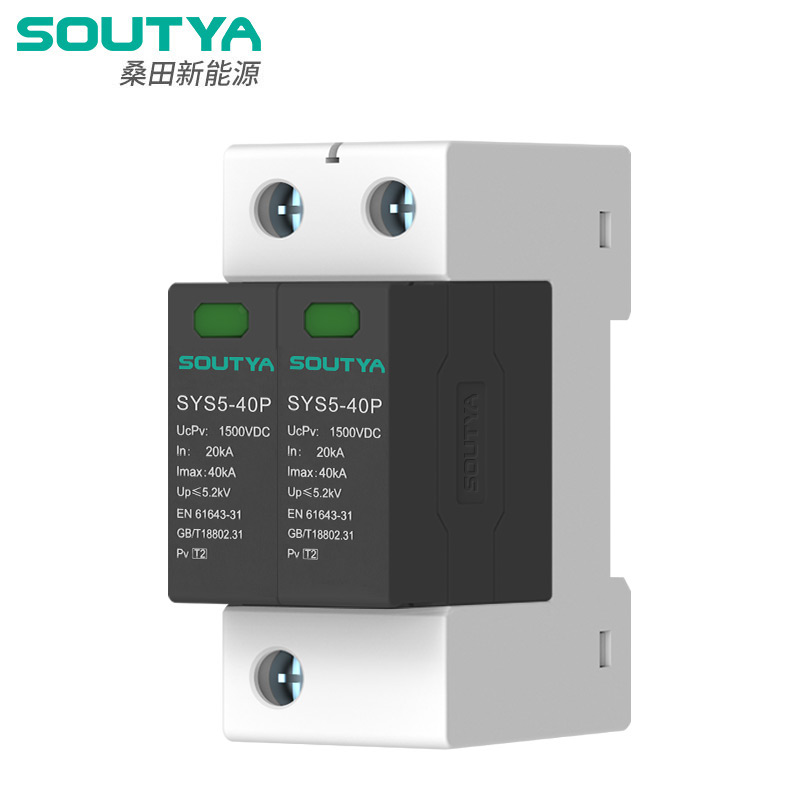
This article explains the 1000V DC Combiner Box 1 In 1 Out MCB type from Soutya – a compact, safe, and cost-effective solution for string-level protection in photovoltaic (PV) systems. It covers key features, selection criteria, and technical considerations for engineers and procurement professionals.
PV system designers, electrical contractors, and procurement managers evaluating overcurrent protection devices for solar arrays. This guide focuses on the practical benefits and technical specifications of the 1-in-1-out MCB combiner box.
A DC combiner box aggregates power from multiple PV strings into a single output. The 1 In 1 Out MCB type accepts one string input and delivers one output, integrating a miniature circuit breaker (MCB) for overcurrent and short-circuit protection. Soutya’s model is rated for 1000V DC, making it suitable for high-voltage commercial and utility-scale solar arrays. The MCB provides resettable protection unlike fuses, reducing maintenance costs and downtime.
Single-string protection is critical in distributed PV architectures. Here are the main reasons engineers choose the 1-in-1-out MCB box:
The primary alternative is a fuse-based combiner box, which uses DC-rated fuses (e.g., 10×38 mm or 14×51 mm). Below is a comparison:
| Feature | 1-In-1-Out MCB Type (Soutya) | Fuse-Based Single-String Box |
|---|---|---|
| Protection element | Miniature circuit breaker (resettable) | Glass or cylindrical fuse (one-time) |
| Mounted cost | Higher (MCB cost) but lower lifetime cost | Lower upfront, higher replacement cost |
| Maintenance | Manual reset – no spare needed | Replace blown fuse – stock required |
| Response time | Instantaneous magnetic trip (short circuit) | Depends on fuse curve |
| Max voltage | 1000V DC (or 1500V DC for some models) | 1000V DC |
For multi-string applications, a larger combiner box (e.g., 4-in-1-out) is needed. The 1-in-1-out is best for single-string segments or as an add-on protection module.
Typical customers include:
When evaluating the 1000V DC Combiner Box 1 In 1 Out MCB type, consider these parameters:
The product design and application should reference:
A: Standard 1000V rated boxes cannot be used on 1500V systems. Check the product label; Soutya offers separate 1500V models if needed.
A: No. AC MCBs lack DC arc-extinguishing properties and may fail to interrupt a DC fault. Always use a DC-rated MCB.
A: MCBs are rated for thousands of mechanical operations and a limited number of fault interruptions. In PV systems, nuisance trips are rare; the MCB can last the life of the array (25+ years) if not overloaded.
A: The MCB rating should be 1.25–1.56 times the string short-circuit current (Isc) to avoid nuisance tripping. Use the following table as a guide (for typical modules):
| String Isc | Recommended MCB Rating |
|---|---|
| 6 A | 10 A |
| 8 A | 16 A |
| 10 A | 20 A |
For detailed specifications, pricing, and bulk orders of the 1000V DC Combiner Box 1 In 1 Out MCB type from Soutya, visit the product page. Contact our sales team for customized solutions.
References
[1] IEC 62548:2016. Photovoltaic (PV) arrays – Design requirements [S].
[2] GB/T 6829-2017. Residual current operated circuit-breakers with or without overcurrent protection for household and similar uses (RCBOs) [S].
[3] Chen G, Mou X. Study on the coordination between MCB and RCBO in low-voltage power distribution systems [J]. Electrical Engineering, 2022, 104(3): 1823-1835.


Jack
Soutya