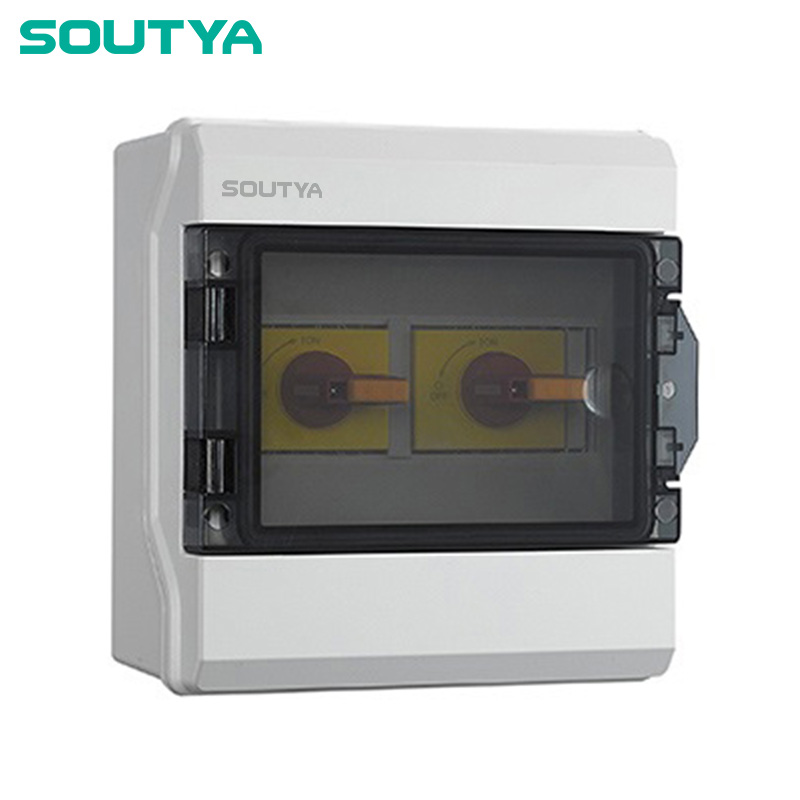
A commercial-scale solar asset operator in southern Europe manages 85 MW of ground-mounted PV capacity across twelve sites. Each site uses high-power string inverters that output 690 V AC. Before upgrading, the AC-side connection between four inverters and a step-up transformer was the most failure-prone point of the entire plant. After retrofitting with the Soutya 690V AC Combiner Box 4 In 1 Out, the operator cut AC-side fault downtime by 78% in six months.
The company operates several 5 MW to 10 MW PV plants built between 2017 and 2020. In each plant, groups of four inverters deliver 690 V AC through separate junction boxes and individual switchgear before entering a medium-voltage transformer.
Aged wiring and non-integrated protection equipment had become a reliability issue. The plants were staffed by a small O&M team, and the average time to diagnose an AC-side problem exceeded half a day. With the region moving to shorter feed-in-tariff windows, the owner needed higher availability and lower service cost per kilowatt-hour.
Before the retrofit, each inverter output ran to a generic 690 V AC junction box equipped with separate molded-case breakers, bolt-on surge arresters, and terminal blocks. These boxes did not provide equal phase spacing or adequate heat dissipation. Faults occurred in three main forms:
The total annual cost of these AC-side failures—including repair materials, labor, and lost revenue—was $23,000 per 10 MW site.
The operator reviewed three alternatives: standard AC distribution boards from a local panel builder, commercial fused disconnects, and the Soutya box. The panel builder could not deliver a 690 V AC switchboard that passed the Type-2 surge protection tests required by IEC 61643-11. Fused disconnects lacked proper short-circuit coordination with the downstream transformer.
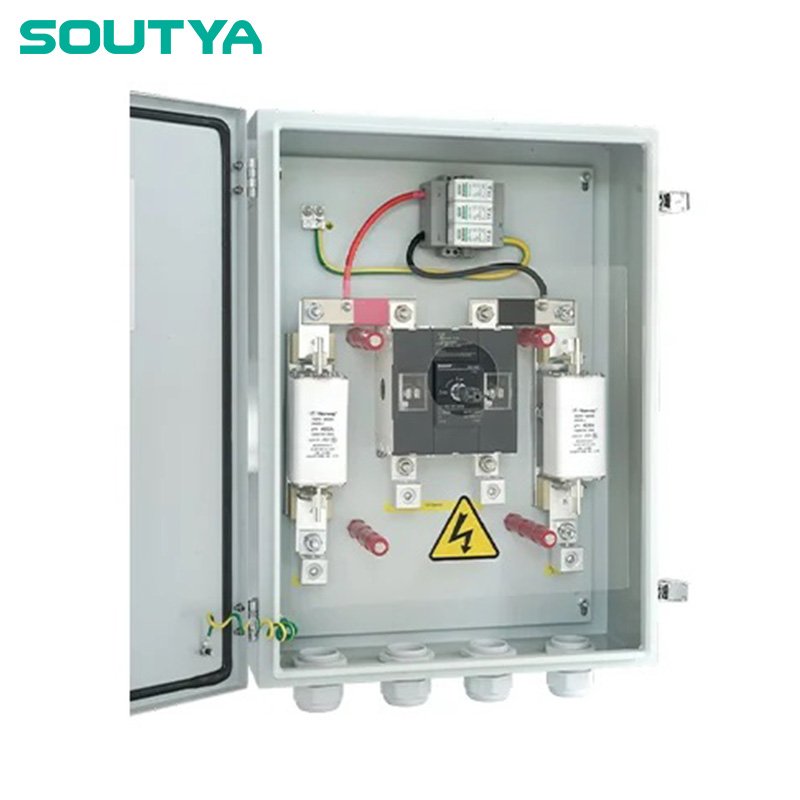
The Soutya 690V AC Combiner Box 4 In 1 Out matched the existing electrical topology exactly. It merges four 690 V AC inputs into one protected output with four input circuit breakers and a single output breaker. The integrated surge protective device is rated according to IEC 61643-11, and the enclosure layout provides separate compartments for cabling and live busbars. This reduced the needed footprint by more than 60% compared to the previous switchgear.
The installation project ran in three phases over four months. The team selected the plant with the highest fault history as the pilot site.
The main steps were:
A typical difficulty was that the existing output cables from the four inverters had different lengths and lay in different tray routes. That caused slightly unbalanced line impedances. The solution was to install busbar equalizer links and trim cable lengths within each group; the terminal temperature stayed uniform after a day of full-load operation.
Six months after the first installation, the operator compared the pilot site with its historical performance:
The operator’s plant engineering manager described the effect: “The Soutya 690V AC combiner box eliminated the worst thermal and surge failures we had at 690 volts. In twelve months, we have not retightened one feeder terminal, and we can isolate a single inverter without stopping production for the whole block. That change paid for itself in this project.”
This case points to several lessons, not limited to the original plant.
If the operator were to repeat the project, it would order one spare box in the initial batch and perform thermal imaging scans during commissioning, because those scans made the final terminal checks and traceable. The company has since applied the same 690V AC combiner box to its older 10 MW plants and expects the same availability improvement across the full 85 MW portfolio.
Industry references:


Jack
Soutya