News

Why a 1500V Solar DC Disconnect Combiner Box Is Essential for Utility-Scale PV

2026-06-26 0 Leave me a message
The 1500V Solar DC Disconnect Combiner Box is the backbone of safe and efficient power aggregation in utility-scale photovoltaic systems. This guide from Soutya explains why this component matters for large PV plants, how it reduces balance-of-system costs, and what to look for when selecting a reliable solution.

Key Takeaways

  • 1500V DC systems reduce cabling and installation costs by up to 30% compared to 1000V
  • Integrated disconnect switch provides local lockout/tagout capability for maintenance safety
  • Proper arc-fault and surge protection are critical for 1500V combiner boxes
  • UL 1699B and IEC 62548 compliance ensures reliability and market acceptance

What Does a 1500V DC Combiner Box Do?

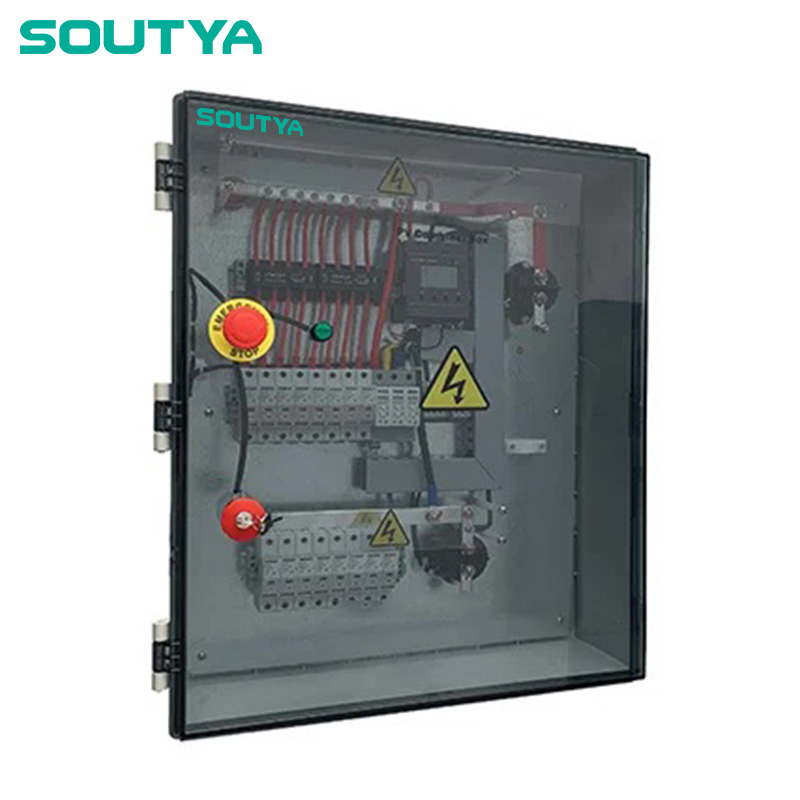
A 1500V Solar DC Disconnect Combiner Box collects multiple PV string outputs into a single bus, providing overcurrent protection, surge protection, and a visible break for safe isolation. In utility-scale solar farms, these boxes are installed between the module arrays and the inverter. The 1500V rating allows longer strings ( 30–40 modules per string) and reduces the number of strings, lowering overall cable and trenching costs.

Why Move to 1500V Solar Systems?

The shift from 1000V to 1500V DC systems has become standard for large ground-mount installations. Higher voltage enables longer string lengths, which means fewer strings per megawatt and less DC wiring. Studies show that 1500V architectures can reduce balance-of-system (BOS) costs by 10–30%, depending on site layout. The 1500V Solar DC Disconnect Combiner Box from Soutya supports this voltage class with proper clearance and creepage distances, ensuring safe operation under IEC 60947-2 and UL 1699B.

Which Pain Points Does a Disconnect Combiner Box Solve?

Procurement and engineering teams face several challenges in large PV plants:

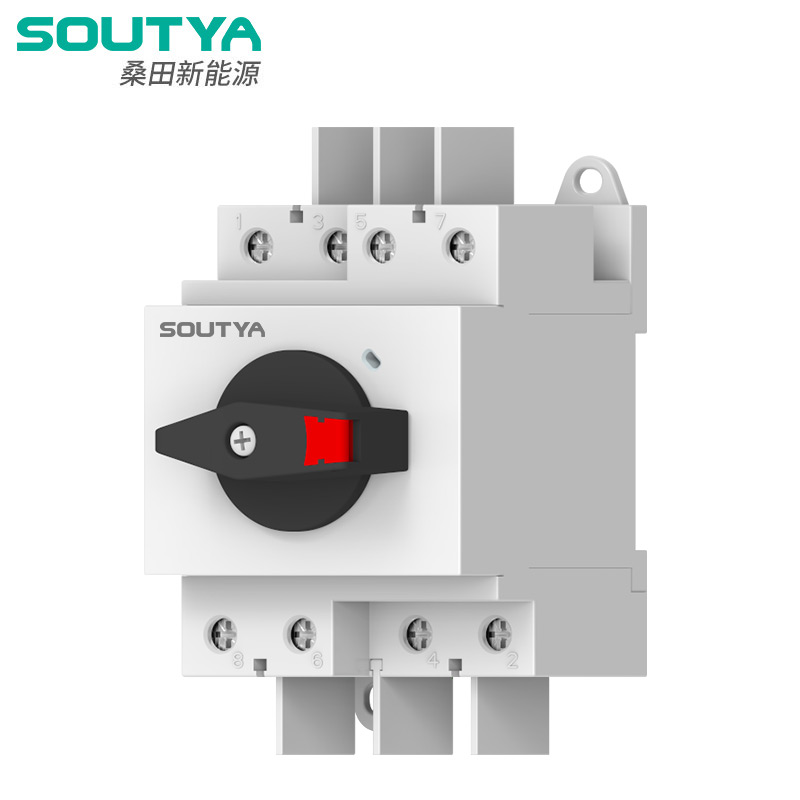
  • Safety isolation: A built-in DC disconnect allows maintenance workers to lock out the circuit at the combiner level, eliminating the risk of backfeed from other strings.
  • Arc-fault protection: 1500V arcs are more energetic and harder to extinguish. Advanced combiner boxes incorporate arc-fault detection per UL 1699B.
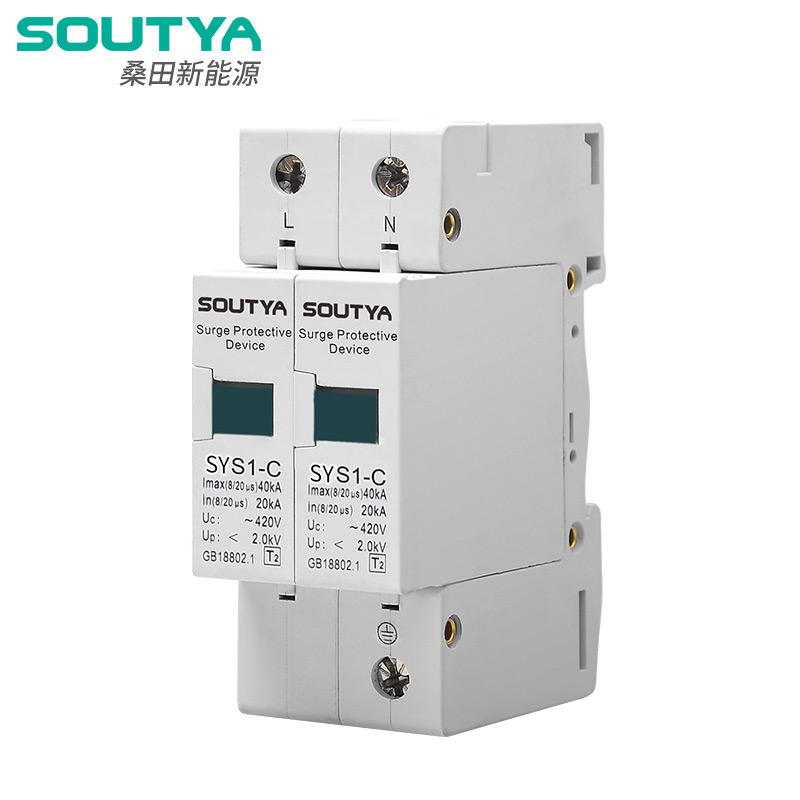
  • Surge protection: String inverters and combiner boxes are exposed to lightning-induced surges. Type 2 SPDs inside the box limit overvoltages, as shown in research on lightning effects in solar plants.
  • Space and weight: Traditional 1000V combiners require more units per MW. A 1500V solution reduces enclosure count by up to 40%, simplifying mounting and cabling.
Note: Always verify that the disconnect switch is rated for DC load-break operation. Some switches rated for AC only may fail under DC arcing. Soutya’s combiner boxes use dedicated DC-rated switches with arc chambers.

What Features Should You Look For?

When evaluating a 1500V Solar DC Disconnect Combiner Box, consider:

  • Voltage rating: Minimum 1500V DC per UL 60947-2 and IEC 60947-3.
  • Maximum current: 300A to 500A bus rating, depending on the number of strings.
  • IP rating: NEMA 4X or IP65 for outdoor installation.
  • Arc-flash rating: The enclosure should be designed for arc-fault containment.
  • Monitoring: Optional string-level current and voltage monitoring for predictive maintenance.
Feature1000V Box1500V Box (Soutya)
Max System Voltage1000V DC1500V DC
Typical String Length20–25 modules30–40 modules
Strings per Combiner8–1612–24
BOS Cost SavingsBaseline~20%
Arc-Fault DetectionOptionalIntegrated (UL 1699B)

Which Standards Govern 1500V Combiner Boxes?

For global projects, compliance with international standards is non-negotiable. Key references include:

  • UL 1699B:2018 – Photovoltaic (PV) DC Arc-Fault Circuit Protection. This standard defines the test protocols for arc-fault detection in DC circuits up to 1500V.
  • IEC 62548:2016 – Photovoltaic (PV) arrays – Design requirements. Covers wiring, overcurrent protection, and combiner box configuration for systems up to 1500V.
  • IEC 60364-7-712:2017 – Low-voltage electrical installations – Part 7-712: Solar PV power supply systems. Provides safety guidelines for DC combiners and disconnects.

Asked Questions

Q: Is a 1500V combiner box always better than 1000V?

Not for every site. 1500V systems reduce costs in large, open areas but may require strict safety protocols. For rooftop or small commercial systems, 1000V remains common.

Q: What is the lifespan of a 1500V DC disconnect switch?

High-quality DC switches in Soutya’s combiner boxes are rated for 10,000+ mechanical operations and 1,000 full-load break operations under 1500V DC.

Q: Can I retrofit existing 1000V combiners to 1500V?

No. The internal clearances, creepage distances, and switch ratings differ. You must replace with a dedicated 1500V rated combiner box.

Q: Does the combiner box require a separate disconnect switch ahead of the inverter?

Most codes require a disconnecting means at the combiner output. The integrated disconnect in Soutya’s 1500V Solar DC Disconnect Combiner Box satisfies this requirement.

Need a Reliable 1500V Solar DC Disconnect Combiner Box?

Explore the Soutya 1500V Solar DC Disconnect Combiner Box – designed for utility-scale PV with built-in disconnect, arc-fault detection, and surge protection.

View Product Details
1500V Solar DC Disconnect Combiner Box by Soutya

References

  1. UL 1699B:2018. Photovoltaic (PV) DC Arc-Fault Circuit Protection. Underwriters Laboratories.
  2. IEC 62548:2016. Photovoltaic (PV) arrays – Design requirements. International Electrotechnical Commission.
  3. IEC 60364-7-712:2017. Low-voltage electrical installations – Part 7-712: Solar PV power supply systems. International Electrotechnical Commission.
Related News
Leave me a message
X
We use cookies to offer you a better browsing experience, analyze site traffic and personalize content. By using this site, you agree to our use of cookies.Privacy Policy
RejectAccept