News

How a Solar EPC Company Reduced Installation Costs by 25% Using the 1000V DC Combiner Box 4 In 2 Out Isolator Type

2026-07-17 0 Leave me a message

Customer Background

Based in Dubai, GreenSun Energy is a mid-sized EPC contractor specializing in commercial and industrial rooftop solar installations. With a portfolio of over 50 MW installed across the Gulf region, they focus on maximizing energy yield while minimizing installation complexity. Their typical projects involve 200–500 kW arrays using 1000V DC systems.

Challenges and Pain Points

GreenSun used separate combiner boxes and isolator switches from different vendors. This approach led to several issues:

  • Space constraints: Mounting two separate enclosures on already crowded rooftops was inefficient.
  • Wiring complexity: Interconnecting the combiner box and isolator required additional cabling and termination points, increasing potential failure points.
  • Installation time: Each installation took an extra 2–3 hours for wiring and testing the isolator interface.
  • Reliability concerns: Loose connections at the interface caused occasional arcing and downtime.

These problems translated into higher labor costs, longer project timelines, and a 2% rework rate due to wiring errors.

Why the 1000V DC Combiner Box 4 In 2 Out Isolator Type?

GreenSun evaluated integrated combiner box options from three manufacturers. The Soutya product stood out for several reasons:

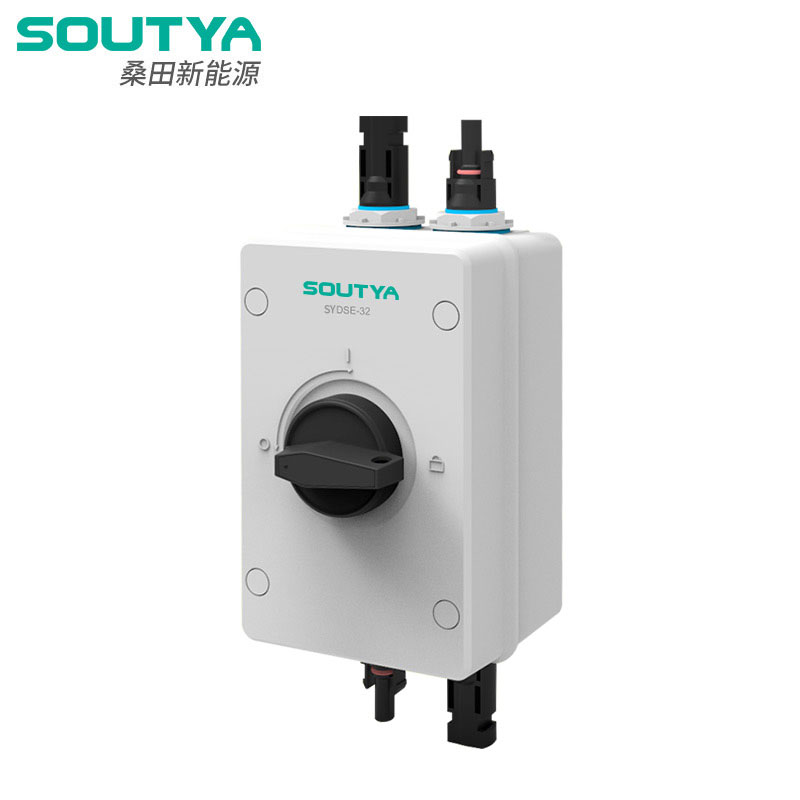
  • All-in-one design: The 4-in-2-out configuration with built-in isolator eliminates the need for a separate disconnect switch.
  • Rated for 1000V DC: Matches their system voltage exactly, with adequate creepage and clearance distances.
  • Easy installation: Pre-assembled internal busbars and labeled terminals reduced wiring errors.
  • Cost-effective: Lower total material cost compared to buying separate boxes and switches.

Implementation and Application Process

The transition took place over three months. GreenSun first deployed five units on a pilot site—a 300 kW rooftop in Sharjah. Installation steps included:

  1. Mounting the single enclosure on a pre-drilled rack.
  2. Connecting four string inputs (each up to 15 A) to the internal busbars.
  3. Routing the two output cables to a central inverter.
  4. Testing the isolator switch operation and verifying voltage drop.
  5. Sealing all cable entries with IP65-rated glands.

The main challenge was adapting their crews to a new layout, but a half-day training session resolved this. After the pilot, they rolled out the Soutya box on 10 more projects.

Application Effects and Quantified Results

After six months of use, GreenSun measured the following improvements:

  • Installation time reduced by 30%: Average install dropped from 8 hours to 5.5 hours per combiner box.
  • Material costs cut by 25%: Eliminating separate isolator enclosures and interconnecting cables saved $350 per unit.
  • Rework rate near zero: Only one wiring error occurred in 30 installations, down from an average of 2 per 10.
  • System uptime >99.9%: No isolator-related failures during the

Overall, GreenSun estimates annual savings of $40,000 across their 100+ installations per year.

Customer Voice

“The Soutya combiner box with built-in isolator was a important development for our installation workflow. We no longer worry loose connections between separate boxes, and our crews complete rooftops faster than before.” — Ahmed Al-Rashid, Project Manager at GreenSun Energy

Experience and Insights

GreenSun’s experience offers lessons for other solar integrators:

  • Simplify your BOM: Combining components reduces procurement complexity and installation labor.
  • Train crews upfront: A short session on the new hardware prevents mistakes and builds confidence.
  • Test on a pilot first: Validate performance before full rollout to avoid systemic issues.
  • Consider future expansion: The 4-in-2-out configuration allows adding more strings if needed.

If GreenSun could redo the project, they would involve their installation team earlier in the evaluation process to ensure the box layout matched their wiring habits.

Industry Standards Referenced

  • IEC 62548:2016 — Photovoltaic (PV) arrays — Design requirements (covers combiner box configuration and safety).
  • IEC 61643-11:2011 — Low-voltage surge protective devices — applicable for optional SPDs that can be integrated into the combiner box.

1000V DC Combiner Box 4 In 2 Out Isolator type

Related News
Leave me a message
X
We use cookies to offer you a better browsing experience, analyze site traffic and personalize content. By using this site, you agree to our use of cookies.Privacy Policy
RejectAccept