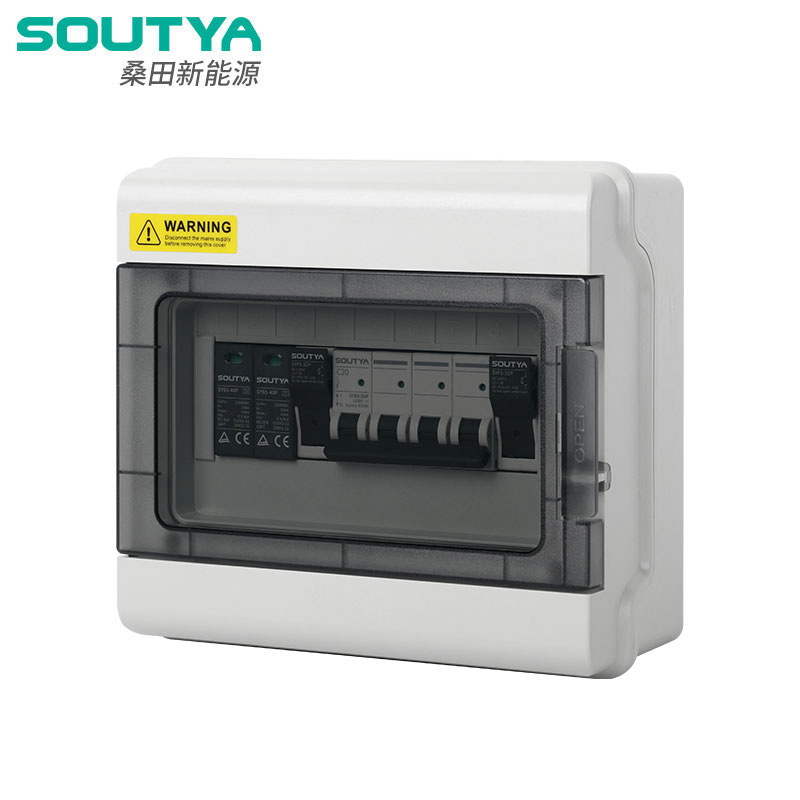
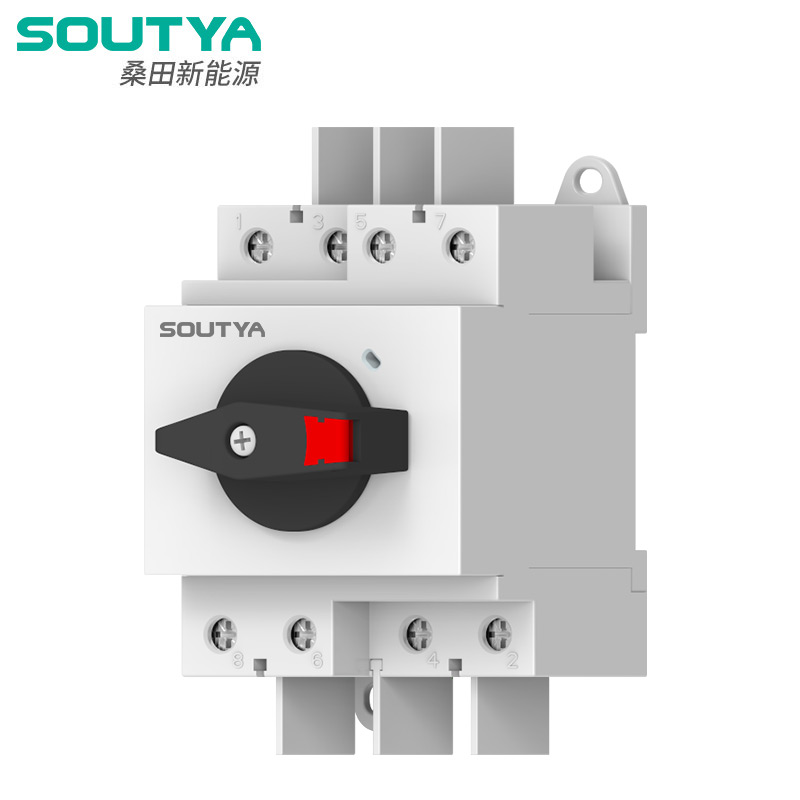
An External DC Isolator Switch is a safety-critical device used in photovoltaic (PV) systems to isolate DC circuits for maintenance, emergency shutdown, and fire safety. This article explains its function, selection criteria, and why it is essential for any solar installation. For more products, visit the External DC Isolator Switch category at Soutya.
This article covers the purpose, selection, and application of external DC isolator switches in solar PV systems. It provides engineers, contractors, and procurement professionals with actionable guidance based on industry standards.
An external DC isolator switch is a manually operated device that disconnects the DC side of a solar array from the inverter or combiner box. Its primary function is to provide a safe means of isolation during maintenance, fault clearing, or emergency shutdown. Unlike AC switches, DC isolators must handle the unique challenges of direct current, including arc extinction and polarity reversal.
The switch is mounted on the exterior of a building or near the solar array, allowing first responders or technicians to cut power without entering the structure. Compliance with standards such as IEC 60947-1 and GB/T 14048.1 ensures reliable performance under load.
Solar PV systems generate DC power that can reach voltages up to 1500V. Without proper isolation, the risk of electric shock, arc flash, and fire increases . Many national electrical codes (e.g., NEC 690.13 in the US) require a readily accessible DC disconnecting means at the array location. An external isolator fulfills this requirement by providing a visible break in the circuit.
In addition to code compliance, external DC isolators improve system reliability. They allow safe isolation of the array for inverter replacement, cable testing, or cleaning. Using a switch rated for DC under the IEC 61439-1 framework ensures it can withstand the continuous current and fault conditions typical in PV installations.
Note: Always verify that the isolator's voltage rating exceeds the maximum system voltage, including temperature corrections for open-circuit voltage (Voc).
Selection depends on system voltage, current, enclosure rating, and environmental conditions. Key steps include:
Soutya offers a range of External DC Isolator Switches designed to meet these criteria, with robust arc chambers and double-pole configurations for both positive and negative lines.
The following parameters are critical when comparing isolator switches:
| Parameter | Importance | Typical Values |
|---|---|---|
| Rated Voltage (DC) | Must exceed system Voc | 600V, 1000V, 1500V |
| Rated Current | Based on array Isc × 1.25 | 16A, 32A, 63A |
| IP Rating | Outdoor durability | IP65, IP66 |
| Poles | Number of switching paths | 2P (positive & negative), 4P |
| Utilization Category | Load type capability | DC-21A, DC-22A |
| Mechanical Endurance | Number of operations | 10,000 cycles |
Reference to the IEC 60947-3 standard ensures the switch is tested for DC switching performance.
A properly installed external DC isolator switch from a reputable brand like Soutya reduces these risks. Always follow the manufacturer's wiring diagram and torque specifications.
While DC circuit breakers provide overcurrent protection, an isolator is strictly a disconnecting means. It does not trip automatically but offers a visible break. Fuses cannot serve as isolators because they do not have a switching mechanism. Combined devices (switch-disconnectors) exist, but for external use, a dedicated External DC Isolator Switch offers the simplest, most cost-effective solution.
A: No. AC isolators are designed for sinusoidal current; DC arcs are harder to extinguish. Using an AC-rated switch on DC can cause arc persistence and equipment failure.
A: For systems above 120V DC or where grounded negative is not required, double-pole isolation of both conductors is recommended for full safety.
A: Periodic visual inspection for corrosion, moisture ingress, and mechanical wear. Lubrication of moving parts as per manufacturer schedule.
A: Look for markings on the product indicating IEC 60947-3 compliance and the utilization category (e.g., DC-21A). Third-party test reports provide verification.
Choosing the right External DC Isolator Switch is essential for safety and code compliance. For engineering support and bulk pricing, contact the Soutya team.


Jack
Soutya