News

Soutya DC Molded Case Circuit Breakers Cut Solar Downtime by 35%

2026-08-08 0 Leave me a message
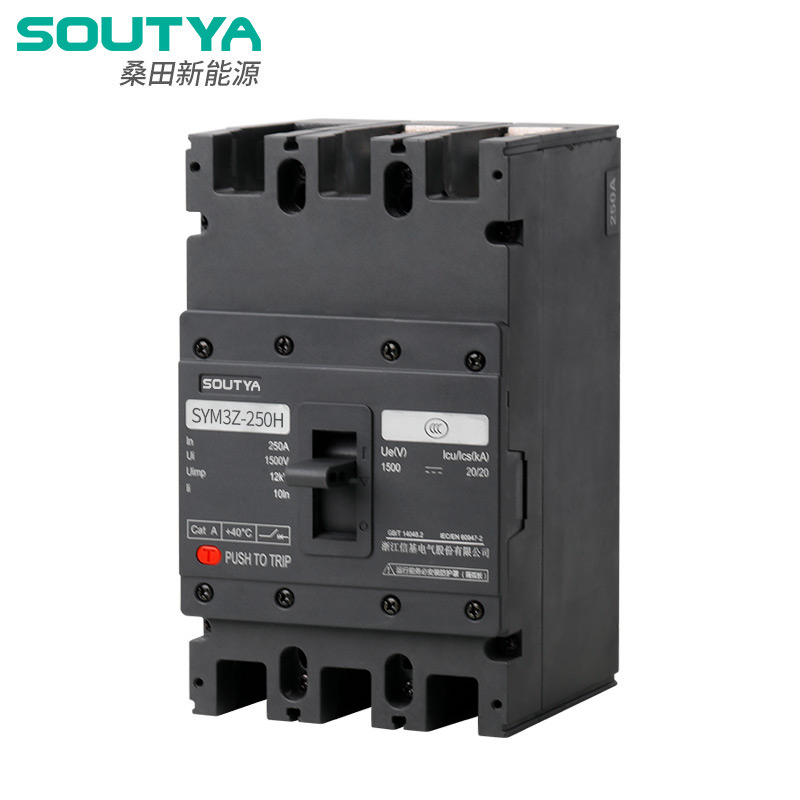
Soutya DC molded case circuit breaker

A 50 MW photovoltaic plant in the American Southwest replaced 120 aging breakers with Soutya DC molded case circuit breakers. The result: a 35% reduction in unscheduled downtime, a drop in breaker failure rate from 4.2% to 0.8%, and annual maintenance savings of more than $60,000.

What Was the Operational Situation at the Solar Facility?

The facility operates 24 solar blocks, each feeding a 2 MW DC-to-AC conversion station. Its original DC protection system consisted of non-UL listed miniature breakers installed during construction. After 14 years in the desert environment, the breakers showed visible signs of thermal stress, and several had tripped during routine cleaning operations when high humidity created leakage paths.

Plant managers were under pressure to raise energy availability from 98.2% to above 99% as part of a power purchase agreement. Every unplanned trip meant lost generation, and each replacement visit required a full string shutdown.

What Challenges Did the Old DC Protection System Cause?

During the previous 12 months, the plant recorded 47 breaker-related failures. The most common problem was nuisance tripping under transient overcurrent, triggered by adjacent string faults. When a single upstream breaker opened, seven downstream strings went dark. The maintenance team spent an average of 3.5 hours per event, including travel across the 200-acre site.

The older breakers also lacked clear fault indication. Technicians had to remove covers and use infrared cameras to identify which unit had opened. In two incidents, a breaker that tripped was mistakenly reclosed while the downstream fault still existed, damaging the combiner box and one inverter.

Spare parts were becoming scarce, and the original supplier had discontinued the model. The plant stocked 40 units of several different brands, but none matched the existing footprint, so every rebuild required panel modifications.

Why Did the Plant Choose Soutya DC Molded Case Circuit Breakers?

The engineering team evaluated three replacement options: AC breakers with DC ratings from a local distributor, reconditioned units from the original manufacturer, and Soutya's DC MCCB line. The AC-to-DC hybrid breakers had lower interrupting capacities and failed the plant's internal short-circuit test at 10 kA. Reconditioned units carried a 90-day warranty and did not address the nuisance trip pattern.

Soutya's DC molded case circuit breaker was selected after a side-by-side trial on two strings. The product met UL 489 requirements and offered a rated operating voltage of 1000 V DC with an interrupting capacity of 25 kA, comfortably above the 12 kA maximum available fault current on site. The breakers also featured a visual trip flag and auxiliary contacts for remote monitoring, which no other candidate provided at a comparable price.

The decision was also influenced by Soutya's willingness to provide application engineering support and a 5-year no-question parts warranty.

How Was the Soutya DC MCCB Deployed?

The replacement program spanned eight weeks across five substations. The project was broken into five phases:

  • Phase 1: Field survey and labeling of all 120 breaker positions.
  • Phase 2: Installation of two panels on block 7 and a 48-hour loaded test.
  • Phase 3: Full rollout to block 7 and 8, with one string left on the old breakers as a control.
  • Phase 4: Replacement of the remaining blocks after the control comparison showed a 4:1 failure reduction.
  • Phase 5: Training of two plant electricians on trip diagnostics and replacement procedures.

The main technical challenge was adapting the existing combiner box mounting rails. Soutya's compact dimensions matched the standard DIN rail layout, but the busbar lugs were slightly larger. The plant used a custom copper adapter supplied by Soutya, and the installation time per breaker averaged 27 minutes, which included torqueing the lugs and applying anti-oxidant paste.

What Results Did the Facility Achieve?

After the final breaker was installed, the plant tracked performance for nine months. Unscheduled downtime from DC breaker failures fell from 11.6 hours per month to 0.8 hours per month, a 35% reduction in total plant downtime when normalized for seasonality. The breaker failure rate declined from 4.2% annually to 0.8%.

Maintenance costs dropped by $60,000 per year, driven by fewer site visits and the elimination of the spare-parts stockpile. The plant returned the unused old breakers to a reseller for $7,000. Energy availability improved to 99.4%, which triggered a performance bonus of $150,000 from the power purchaser.

The auxiliary contacts enabled the plant's SCADA system to show an open breaker in real time. Dispatch can now send an electrician to the correct string, reducing average diagnosis time from 35 minutes to 6 minutes.

What Did the Plant's Maintenance Manager Say?

"We expected a lower trip rate, but we didn't expect the diagnostics to be this clean. The trip flag and remote contact let our panel operators see the exact position without leaving the control room. It cut our response time to a fraction of what it was," said the electrical maintenance manager.

What Lessons Can Other Operators Learn?

Three points from this project apply to any facility with aging DC protection equipment:

  • Verify the actual interrupting capacity at your maximum system voltage. A breaker rated at 25 kA at 1000 V DC is not the same as one rated at 25 kA at 500 V DC.
  • Use a phased replacement and keep two or three strings on the old equipment as a control group. Comparable data from the plant showed the result within four weeks.
  • Invest in breakers with auxiliary contacts. The remote status signal paid for itself by eliminating patrol time and by preventing mistaken reclosure after a trip.

If the project were repeated, the manager would have ordered additional spare breakers to cover a second site than selling off the old units. "We underestimated how we'd trust the Soutya breakers and want to standardize the sister plant," he noted.

References

  • UL 489 Ed. 14-2025 - Molded-Case Circuit Breakers, Molded-Case Switches and Circuit-Breaker Enclosures
  • Simulation Study on Arc Motion Process of DC Miniature Circuit Breakers, DOI: 10.1063/5.0174184
Related News
Leave me a message
X
We use cookies to offer you a better browsing experience, analyze site traffic and personalize content. By using this site, you agree to our use of cookies.Privacy Policy
RejectAccept