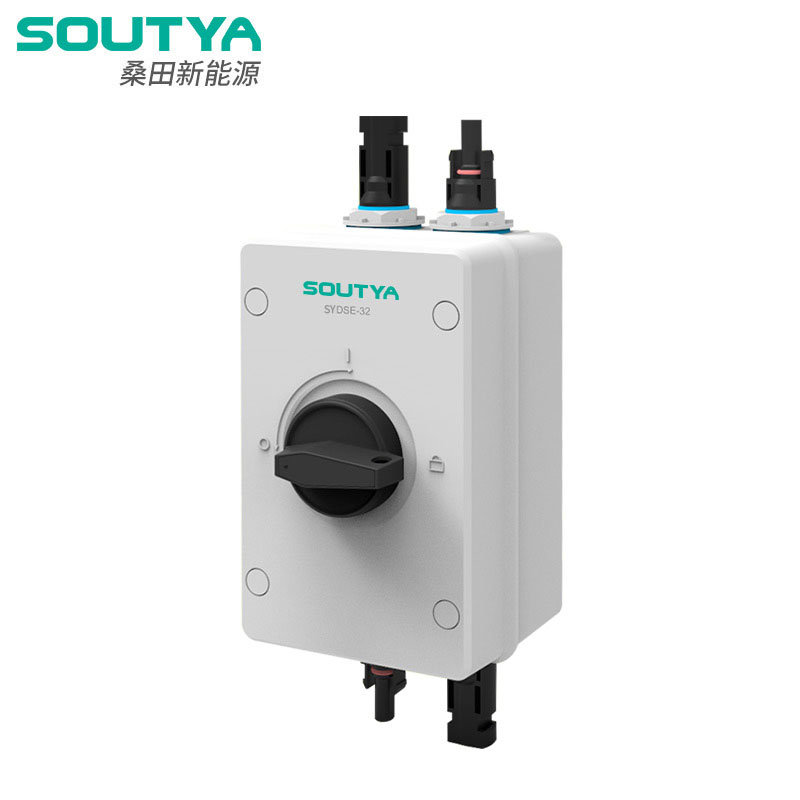
For a commercial solar EPC firm based in southern Spain, every rooftop project carried a familiar bottleneck. The company specialized in 100 kW to 500 kW industrial rooftop photovoltaic installations for warehouses and cold storage facilities. With 40 installations completed in the previous year, the team was experienced but still struggled with the electrical balance of system. Each project required a separate DC combiner box on the roof and a separate AC distribution enclosure near the inverter. That meant two wall-mounted boxes, two sets of cable entries, and a long list of terminations that had to be checked twice.
Project timelines were tight. Most clients expected a 6-week construction window, and the electrical phase consumed 10 days of that. Any mistake in wiring the DC and AC circuits would surface only at commissioning, forcing the team to climb back onto the roof and inspect every connection.
Separating the DC combiner and AC distribution created a series of practical problems. First, the DC side required a string combiner box rated for 1000V with fuses, surge protection, and a disconnect switch. The AC side needed its own enclosure with a breaker and a second SPD. Because two boxes were installed at different heights and locations, pulling cables between them added material and labor.
Wiring errors were the bigger cost. On a typical 250 kW project, the crew terminated 12 to 16 DC string circuits and then made the AC output connections. The risk of swapping a positive and negative conductor was real, when working with a compact box. In the previous year, the company had to re-pull and re-terminate DC wiring on three separate sites, adding roughly $1,800 per incident in labor and lost schedule. A more serious issue was the lack of a coordinated disconnect. When a client asked for a visible lockout point on the AC side, the crew had to install an additional safety switch, adding another $320 per project in parts and labor.
The company reviewed three approaches. One was to keep the two-box setup and improve labeling. That did not address the core problem of duplicated enclosures and multiple cable entries. Another option was a custom-built panel from a local fabricator, but that came with long lead times and no certification for a combined DC and AC assembly. The third option was the Soutya DC+AC Combiner Box 600V 1000V 1 In 1 Out industrial enclosure.
The decision came down to three factors. First, the Soutya box integrates the DC string combiner and the AC output protection in a single NEMA-rated enclosure. That eliminated the need for a separate AC distribution box. Second, the unit is factory-wired internally between the DC bus and the AC breaker, so the installer only terminates the PV strings on one side and the inverter feed on the other. Third, the box is rated for both 600V and 1000V DC systems, which covered the range of inverters the company specified. The 1-in-1-out configuration matched the standard layout for a single inverter with one DC input and one AC output.
The first deployment was on a 180 kW rooftop project in Seville. The project timeline was 4 weeks, and the electrical phase was scheduled for the second week. The team spent two hours reviewing the Soutya box's wiring diagram and making sure the internal connections aligned with their inverter model.
Installation followed a simple sequence. The crew mounted the combined box on a unistrut frame near the inverter. They pulled the eight PV string cables into the DC section and terminated them on the fuse holders. Next, they routed the AC output cable from the box to the inverter input. The final step was torquing all lugs to specification and closing the cover.
The main difficulty was the DC string layout. The box has a compact interior, and for the first installation, the crew found the fuse holders were closer together than on their previous combiner box. That required extra care when routing the string conductors inside the enclosure. The solution was to pre-cut each string cable to a length and use flexible conduit elbows to keep a tidy radius. After the first two units, the crew developed a standard length template that cut the average string termination time from 14 minutes to 9 minutes per string.
Over the next three months, the company used the Soutya DC+AC combiner box on six projects ranging from 120 kW to 400 kW. The results were consistent.
Across the six projects, the total labor cost savings came to $18,500. The faster install also helped the company win two new contracts because the shortened build time allowed them to take on additional work in the same quarter.
The company's electrical lead, who managed the transition to the Soutya box, described the change . "We stopped troubleshooting between two boxes. The combined unit is simpler for our field crew, and it has eliminated the most common callbacks we used to see at startup."
The project demonstrated three lessons that apply to other commercial solar installers.
If the company were to repeat the process, they would order the Soutya box with the optional DC-rated surge protection device from the factory instead of adding an external SPD later. That would cut installation time by another 30 minutes per project and reduce the number of inverter trips caused by transient events.
The design and deployment of DC+AC combiner boxes for PV systems align with the following standards:


Jack
Soutya