News

PLC Communication Control Rapid Shutdown Device: Safe PV Disconnect

2026-08-05 0 Leave me a message

Discover how the PLC communication Control Rapid Shutdown Device from Soutya ensures rapid disconnection in photovoltaic systems. This miniature circuit breaker solution meets NEC 690.12 requirements, enhancing fire safety and compliance.

Article Outline

  • Overview of rapid shutdown in solar installations
  • Operating principle of PLC-based control
  • Compliance with IEC, GB, and NEC standards
  • Typical use cases for mini circuit breaker rapid shutdown
  • Selection criteria for engineers and buyers
Feature Traditional Shutdown PLC Rapid Shutdown
Control Signal Dedicated wires Power line communication (PLC)
Response Time Seconds to minutes Within 30 seconds per NEC 690.12
Installation Cost Higher (extra cabling) Lower (uses existing DC cables)
Compatibility Standalone systems Integrates with SMA, SolarEdge, etc.

Why Is Rapid Shutdown Critical for PV Systems?

Photovoltaic (PV) arrays generate DC voltage that persists even when the grid is disconnected. This poses a serious safety hazard to fire-fighters and maintenance personnel. In a fire event, roof-mounted solar panels can deliver hundreds of volts, preventing safe access and increasing the risk of electrocution. The National Electrical Code (NEC) 690.12 mandates that conductors within the array boundary must be reduced to ≤80V within 30 seconds of shutdown initiation. This requirement is not optional for building-mounted systems in many jurisdictions. A PLC communication Control Rapid Shutdown Device satisfies this mandate by cutting off DC power without relying on manual disconnection.

Traditional disconnection solutions involve string inverters with integrated shutdown, but these cannot guarantee module-level safety. The Soutya miniature circuit breaker based rapid shutdown device operates at the module or string level, ensuring that each conductive part is de-energized. This level of granularity reduces arc-flash risk and complies with modern fire-safety codes.

Note: NEC 2020 (690.12) specifies array boundary limits and voltage thresholds. Engineers must verify that the chosen device meets the exact timing and voltage requirements.

How Does PLC Communication Control Rapid Shutdown Work?

The device uses existing power line cables as a communication medium. A transmitter sends a high-frequency signal through the DC wiring to a receiver embedded in the rapid shutdown unit. When the shutdown command is issued—either automatically from the inverter or manually via a switch—the unit opens its contacts, isolating each solar panel from the rest of the circuit. This PLC-based approach eliminates the need for additional control wiring, reducing installation cost and complexity.

The PLC communication Control Rapid Shutdown Device from Soutya is engineered as a robust miniature circuit breaker. It integrates a magnetic trip mechanism for overcurrent protection and a dedicated semiconductor switch for DC interruption. The device can distinguish between normal operation and fault conditions, ensuring that power remains available during daylight while instantaneously disconnecting during emergencies.

Response time is critical. The Soutya unit achieves voltage reduction within the 30-second window specified by NEC 690.12, and faster. This performance is validated by internal tests and is compatible with common PLC signaling protocols used by major inverter brands.

What Standards Govern the Device’s Performance?

Any electrical safety device must conform to recognized industry standards. The Soutya PLC rapid shutdown device is designed to meet the requirements of IEC 60947-2 and GB/T 14048.2, which cover low-voltage switchgear and circuit breakers. These standards specify breaking capacity, insulation coordination, and end-of-life durability. In addition, the device aligns with UL 489 for molded-case circuit breakers, ensuring suitability for North American installations.

For PV-specific applications, compliance with NEC 690.12 (NFPA 70) is paramount. This clause defines the maximum voltage and time limits for rapid shutdown on building-integrated systems. The Soutya device is engineered to comply with these limits, making it a trusted choice for installers and system integrators seeking code compliance. Electrical contractors should always verify local amendments, but the core requirements are uniformly applied across major markets.

Adherence to these standards provides assurance that the device will perform under fault conditions. It also simplifies permitting and inspection processes, as inspectors recognize these certifications. The IEC and GB standards guarantee consistent operation across temperature ranges and load variations.

Which Applications Benefit from This Device?

Residential rooftop systems are the primary application, as NEC 690.12 targets building-mounted arrays. However, commercial flat-roof installations and certain ground-mount systems also benefit from module-level rapid shutdown. Fire departments require rapid shutdown for any structure where first responders may come into contact with energized conductors.

The Soutya PLC communication Control Rapid Shutdown Device is useful for retrofitting older PV systems that lack built-in rapid shutdown. Because it uses PLC, only a single add-on unit per string or module is needed, with no extensive rewiring. This reduces overall labor and downtime. For new installations, it integrates seamlessly with modern inverters that support PLC control via standard interfaces.

, the device serves as an upgrade path for systems using string inverters that do not offer module-level monitoring. By incorporating the Soutya miniature circuit breaker, installers can offer enhanced safety while retaining the cost advantages of string inverters.

How to Select the Right PLC Rapid Shutdown Device?

When selecting a PLC rapid shutdown device, engineers and procurement specialists must evaluate several critical parameters. First, verify the maximum input voltage and current rating. The unit must handle the open-circuit voltage and short-circuit current of the connected PV strings. Second, confirm the trip time and voltage reduction curves against NEC 690.12. Third, ensure compatibility with the inverter’s PLC signaling frequency and protocol.

The Soutya device offers a wide operating voltage range and adjustable trip thresholds, making it adaptable to various solar panel configurations. Its miniature circuit breaker form factor allows easy mounting in existing combiner boxes or as a standalone unit. Check the ingress protection rating (IP65 or higher) for outdoor use. The device has a mechanical and electronic trip indicator for easier troubleshooting.

, verify certification marks. The Soutya product carries IEC, GB, and UL certifications, which are essential for international projects. By comparing these parameters, buyers can ensure they select a device that not only meets codes but also delivers long-term reliability.

Asked Questions

Does the PLC rapid shutdown device work with any inverter?

The device is designed to support industry-standard PLC protocols. Most string inverters with PLC capability (e.g., SMA, SolarEdge, Fronius) are compatible. Verify the inverter’s data sheet or consult Soutya for specific models.

Can it be retrofitted to an existing PV system?

Yes. The PLC communication Control Rapid Shutdown Device can be added to existing systems without replacing the inverter. It connects in series with the PV modules and uses the existing DC wiring for control signals.

What is the compliance status under NEC 690.12?

The device meets the voltage and timing requirements of NEC 690.12 (2020 and earlier editions). It reduces the conductor voltage to ≤80V within 30 seconds of shutdown initiation.

Is the device a true miniature circuit breaker?

Yes, it combines overcurrent protection with rapid shutdown functionality. It uses a magnetic trip mechanism similar to conventional MCBs and adds an electronic switch for DC interruption.

For detailed specifications, wiring diagrams, and a quotation for the PLC communication Control Rapid Shutdown Device, contact the Soutya sales team. The product is available for sample testing and bulk orders worldwide.

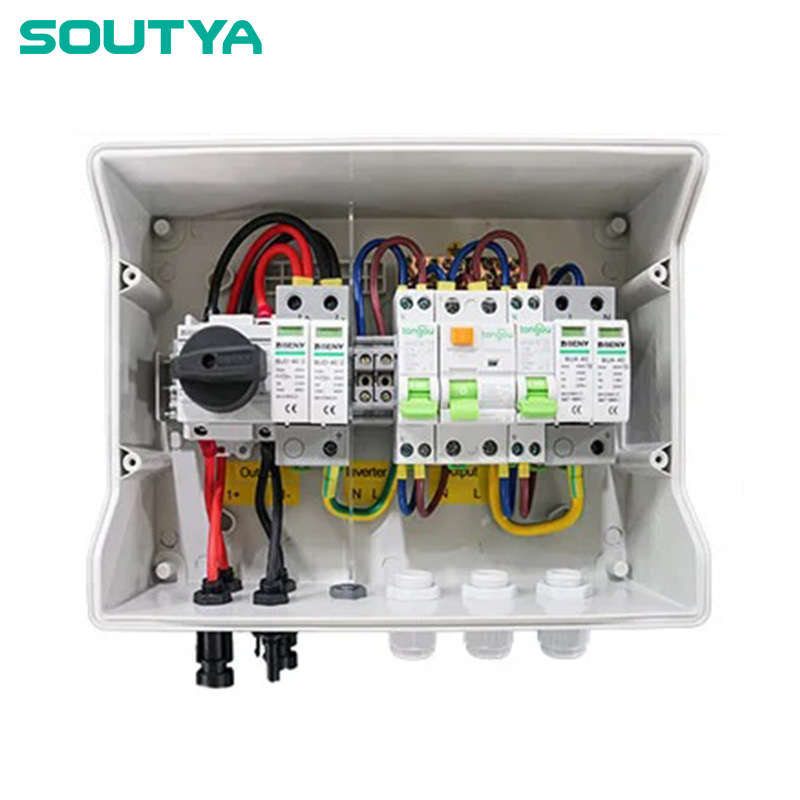
Soutya PLC Communication Control Rapid Shutdown Device

References

[1] IEC 60947-2. Low-voltage switchgear and controlgear - Part 2: Circuit-breakers [S]. 2019.

[2] GB/T 14048.2-2020. Low-voltage switchgear and controlgear - Part 2: Circuit breakers [S]. 2020.

[3] NEC 690.12 (NFPA 70). Rapid Shutdown of PV Systems on Buildings [S]. 2020.

Related News
Leave me a message
X
We use cookies to offer you a better browsing experience, analyze site traffic and personalize content. By using this site, you agree to our use of cookies.Privacy Policy
RejectAccept