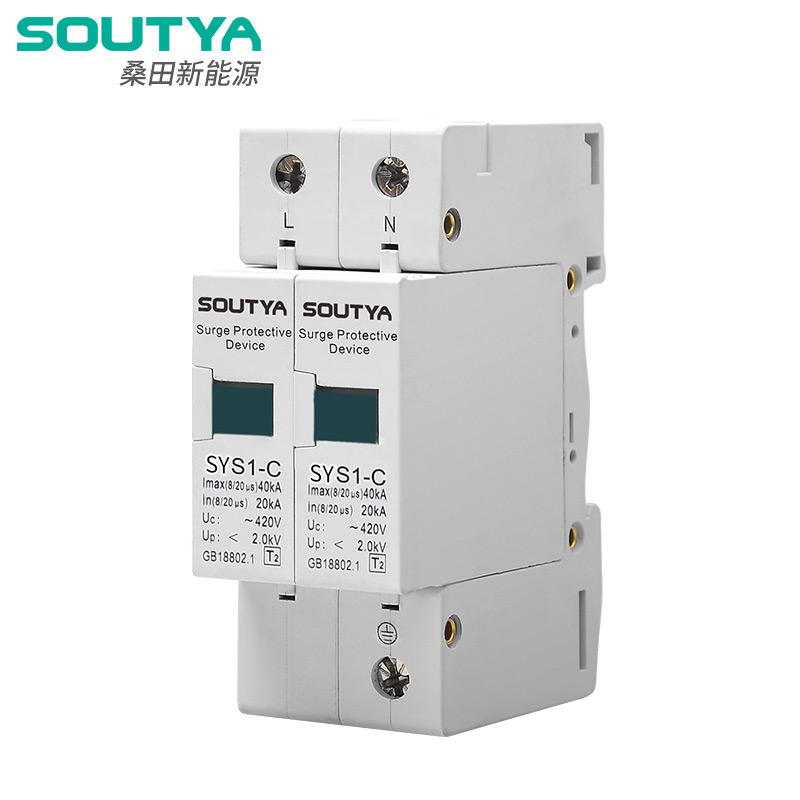
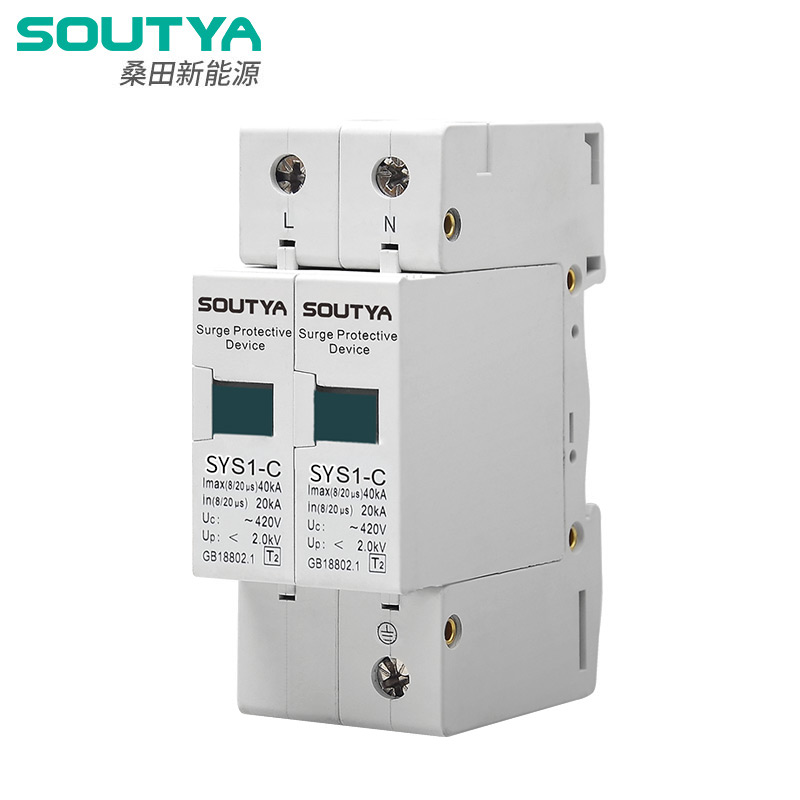
An AC Residual Current Circuit-Breaker with Overcurrent Protection (RCBO) is a multifunctional protective device designed for low-voltage distribution systems. It integrates two core functions: residual current detection (earth leakage) and overcurrent protection (short circuit and overload). Unlike a separate Residual Current Device (RCD) and Miniature Circuit Breaker (MCB), an RCBO offers a compact, coordinated solution that saves space in distribution boards and simplifies wiring. Soutyaele’s AC RCBO series meets the demands of commercial and industrial installations where reliability and compliance with international standards are critical.
Electrical faults can be categorized into two main types: leakage to earth (residual current) and excessive current flow (overcurrent). A residual current fault occurs when insulation fails, causing current to flow through unintended paths, which may lead to electric shock or fire. Overcurrent faults, such as short circuits or overloads, can damage equipment and cause thermal stress. An AC RCBO addresses both risks in a single device. For example, in a commercial building, a damaged cable might produce a 30mA leakage, while a motor startup could cause a temporary overload. The RCBO detects the leakage and trips within milliseconds, and separately responds to overcurrent conditions using thermal-magnetic mechanisms. This dual protection eliminates the need for coordinating two separate devices, reducing installation complexity and potential coordination errors. Soutyaele’s AC Residual Current operated Circuit-Breaker with Overcurrent Protection ensures comprehensive safety for personnel and assets.
The internal architecture of an AC RCBO consists of a residual current sensing coil, a trip amplifier, and a thermal-magnetic overcurrent trip unit. The sensing coil monitors the vector sum of phase and neutral currents. Under normal conditions, the sum is zero. When a leakage current flows to earth, an imbalance is detected, and the coil generates a signal. This signal, after amplification, triggers the trip mechanism to open the circuit. For overcurrents, a bimetallic strip (time-delayed overload) and an electromagnetic solenoid (instantaneous short circuit) act on the same trip mechanism. The rated residual current (IΔn) ranges from 10 mA to 300 mA, with breaking time requirements per standards. Soutyaele’s AC RCBOs are designed for compatibility with TN, TT, and IT systems, and can be installed in distribution boards with modular DIN rail mounting.
Global compliance ensures the safety and interoperability of RCBOs. The predominant standards are IEC 61009-1 and its derivative national standards. In China, GB/T 6829-2017 “Residual current operated circuit-breakers with or without overcurrent protection for household and similar uses (RCBOs)” is the mandatory standard., IEC 60898-1 defines overcurrent protection requirements for circuit-breakers used in household installations. For industrial applications, the device must also meet short-circuit performance criteria similar to IEC 60947-2. Soutyaele’s AC Residual Current operated Circuit-Breaker with Overcurrent Protection is tested to these standards, ensuring reliable operation under defined fault conditions.
Selection of an AC RCBO requires analysis of system parameters. First, identify the nominal voltage and current of the protected circuit. For three-phase systems, ensure the RCBO is rated for line-to-line voltage and has appropriate pole configuration (e.g., 2P, 3P, 4P). Second, determine the residual current sensitivity based on protection objectives: 30 mA for personnel protection, 100-300 mA for fire prevention. Third, evaluate the prospective short-circuit current at the installation point to confirm the RCBO’s breaking capacity (Icn) is sufficient. Fourth, choose the trip characteristic (B, C, or D) that matches the load type—e.g., C curve for motor loads, B curve for resistive loads. Soutyaele offers a range of AC RCBOs with different rated currents, residual sensitivities, and breaking capacities. Check the product page for detailed Soutyaele AC Residual Current operated Circuit-Breaker with Overcurrent Protection specifications.
Installation must follow manufacturer instructions and local electrical codes. Ensure the RCBO is mounted securely on a DIN rail and that connections are torqued to specified values. Periodic testing of the residual current trip function using the test button is recommended—monthly for installations where earth leakage is critical. In environments with high humidity or dust, choose an RCBO with appropriate IP rating. Note that AC RCBOs are intended for sinusoidal residual currents; for non-sinusoidal or DC residual currents, Type A or Type F devices are required. Soutyaele’s AC RCBOs are designed for easy wiring with tunnel-type terminals and clear marking. Always verify the device is de-energized before maintenance.

Jack
Soutya