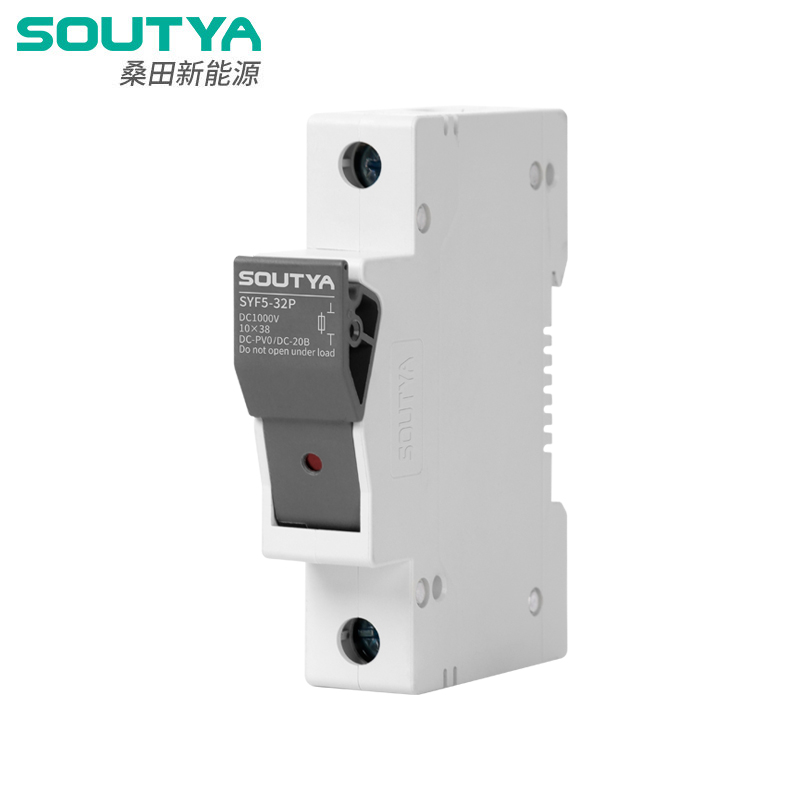
A 1000V DC combiner box is a central junction point in a photovoltaic system. It receives the DC output from multiple solar strings and combines them into fewer output circuits. This reduces the number of cables that run down to the inverter, lowering material and installation costs. A combiner box also provides overcurrent protection, isolation, and fault detection for each input string.
In utility-scale or C&I projects, the system voltage reaches 1000V DC. This higher voltage improves efficiency by reducing resistive losses on the DC side. But it also creates a stricter requirement for component ratings and insulation. Equipment that is not designed for 1000V DC can suffer from arc faults, insulation breakdown, and premature failure. This is why the 1000V DC combiner box must be built with adequate clearances, creepage distances, and rated DC switchgear.
Soutya’s 4 In 2 Out MCB type unit is engineered for this voltage class. It consolidates four strings into two outputs, making it suitable for medium-sized arrays where string count is manageable but cable routing needs to be streamlined.
Soutya combines IEC 62548 design principles with practical field experience. The unit is intended for photovoltaic arrays that require reliable DC circuit protection and flexible string grouping.
A DC combiner box sits at the intersection of high voltage, high current, and outdoor environmental stress. If it fails, the consequences can include cable fires, inverter damage, and extended downtime. The choice of protection method is not a technical preference; it is a safety decision.
One of the key risks in DC systems is the arc fault. Unlike AC, DC current does not pass through zero naturally. Once an arc is established, it can sustain itself and cause severe damage. Standards such as UL 1699B address DC arc-fault detection in photovoltaic systems. While a conventional MCB does not fully replace an arc-fault protection device, a well-designed MCB with proper DC rating can interrupt overloads and short circuits, reducing the chance of arc formation.
Selecting a combiner box from a supplier that adheres to recognized standards gives the buyer confidence. Soutya designs its 1000V DC combiner box 4 in 2 out MCB to meet the electrical spacing and thermal requirements expected by international practice.
The 4 In 2 Out MCB type configuration means the box accepts four input strings and delivers two output circuits. This arrangement reduces the number of inverter-side connections without losing the ability to disconnect individual strings. Because each input is protected by its own MCB, maintenance crews can isolate a faulty string without shutting down the entire array.
For installers, this translates into simpler cable management and fewer termination points. A smaller combiner box footprint also helps on mounting surfaces where space is limited. The MCB provides visible open/closed status, which eliminates the guesswork when troubleshooting. This is useful for large photovoltaic plants where multiple combiner boxes are spread across a wide area.
Soutya’s MCB type unit is built for rapid wiring. The busbars and terminals are labeled, and the enclosure allows surge-rated cables to enter . The result is faster installation and less time spent on site.
Not every combiner box is suitable for 1000V DC operation. Buyers should inspect the following features before making a decision:
The Soutya 1000V DC combiner box is built with these specifications in mind. Its 4-in/2-out layout gives project designers the flexibility to group strings while keeping protection localized.
Combiner boxes use either fuses or miniature circuit breakers (MCBs) for string protection. Both have merits, but the choice depends on maintenance philosophy and project scale.
| Feature | MCB Type | Fuse Type |
|---|---|---|
| Resettable | Yes, reusable after trip | No, must replace after operation |
| Visible status | Clear open/close indication | Not visible without test equipment |
| Response time | Determined by thermal-magnetic mechanism | Depends on fuse curve |
| Service cost | Lower over time for frequent faults | High if repeated faults occur |
| Space required | Slightly larger | More compact |
| Typical use | Small to mid-size arrays, easier O&M | Large arrays, lower upfront component cost |
For a project where downtime is expensive and maintenance teams want to restore operation, an MCB-based combiner box is the better choice. The 4 in 2 out MCB combiner box from Soutya provides this operational convenience without compromising the required 1000V DC rating.
Engineering buyers and procurement managers need suppliers who understand both product quality and application context. Soutya focuses on electrical distribution and photovoltaic components. The 1000V DC combiner box 4 in 2 out MCB type is one example of a product designed with real installation conditions in mind.
Soutya provides detailed documentation, responsive pre-sales support, and practical customization for special voltage or enclosure requirements. The production process includes routine checks on contact resistance, insulation resistance, and mechanical operation of MCBs. This level of quality control reduces the risk of field failures.
For agents and distributors, working with Soutya means access to a steady supply of photovoltaic combiner boxes that meet the technical expectations of their customers. The brand is built on consistency and availability of spare parts, which matters when managing long-term projects.
Not necessarily. Safety depends on correct current rating, breaking capacity, and coordination with the inverter. MCB units offer convenient reset and visible status, but the protection performance must still match the fault current levels of the system. A correctly selected product from Soutya is designed to meet those requirements.
Yes, but the MCB rating must be chosen based on the maximum string short-circuit current. String lengths should be planned so that the operating current stays within the breaker’s rated current. Soutya can help confirm the configuration for your specific array design.
Many projects add SPDs for lightning and switching surges. The Soutya 4 In 2 Out MCB type enclosure includes space for optional SPD modules. Installers should evaluate local lightning risk and follow the recommendations in IEC 62548.
If reset, low maintenance, and easy troubleshooting are priorities, choose MCB. If minimizing initial component cost in a very large installation is more important, fuse-based boxes may be acceptable. The trade-off is downtime during fuse replacement.
Soutya offers a balance of technical compliance, practical enclosure design, and responsive support. The 1000V DC combiner box is built for existing photovoltaic standards and backed by a supplier that understands export and project requirements.
The Soutya 1000V DC Combiner Box 4 In 2 Out MCB type is a practical choice for solar installations that need compact wiring and resettable protection. Speak with Soutya to confirm the specification for your next project.
[1] IEC 62548:2016. Photovoltaic (PV) arrays – Design requirements [S]. 2016.
[2] UL 1699B:2018. Photovoltaic (PV) DC Arc-Fault Circuit Protection [S]. 2018.
[3] Chen G, Mou X. Study on the coordination between MCB and RCBO in low-voltage power distribution systems [J]. Electrical Engineering, 2022, 104(3): 1823-1835.

Jack
Soutya