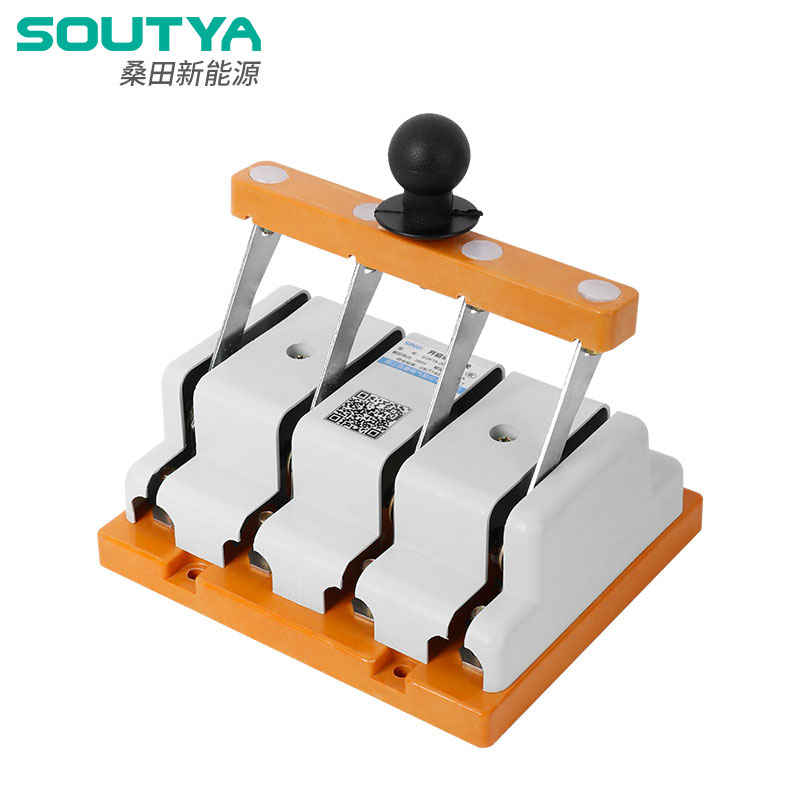
Abstract: Reliable isolation is essential in industrial distribution, energy storage, photovoltaic systems, generator installations, and other high-current electrical applications. The 200-4000A Knife Switch from Soutya is designed to provide dependable switching and visible-break isolation for low-voltage power systems. With robust construction, blade configurations for different current ratings, tin-plated conductive components, and compliance with GB/T 14048.3 and IEC/EN 60947-3, this type of knife switch can support demanding electrical isolation requirements while simplifying maintenance and improving operational safety.
A 200-4000A Knife Switch is a high-current switching and isolation device intended for low-voltage electrical distribution systems. Unlike a conventional control switch designed primarily for frequent operation, a knife switch provides a clear physical separation between conductive components when opened. This visible isolation can be particularly valuable during electrical inspection, servicing, maintenance, and lockout/tagout procedures.
The SYK18 series supplied by Soutya covers high-current applications and is designed for use in distribution boxes, control panels, main disconnect positions, energy-storage systems, photovoltaic equipment, bus sections, and generator-related installations. The manufacturer's published specifications identify GB/T 14048.3 and IEC/EN 60947-3 as applicable standards.
For procurement teams, the key value of this product is not simply its high current rating. The switch combines current-carrying capability with a straightforward mechanical structure and visible-break isolation, making it suitable for applications where maintenance personnel need a clearly identifiable isolation point.
As electrical systems become larger, the consequences of an incorrect isolation procedure also become more serious. Industrial facilities, battery energy-storage systems, PV installations, and generator systems can involve substantial operating currents. A properly selected isolation device helps establish a controlled separation point before maintenance work begins.
A high-current knife switch can provide several practical benefits:
For example, Soutya describes applications in 0.4 kV energy-storage cabinets where the switch can be installed after the main breaker to create a visible isolation gap following PCS shutdown.
The performance of a high-current knife switch depends on more than its nominal amperage. Contact structure, pressure, conductive materials, mechanical configuration, and installation conditions all influence long-term reliability.
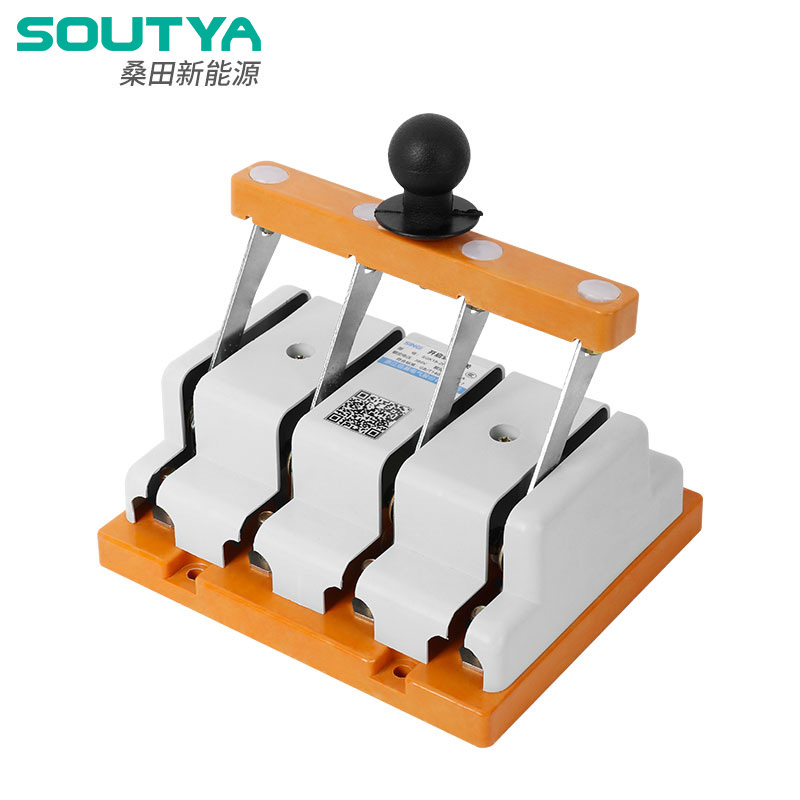
According to Soutya's product information, 200A and 400A versions use single blades, while 600A, 1000A, and 1500A versions use dual blades. This configuration allows the conductive structure to be adapted to different current levels and mechanical requirements.
Leaf springs are installed on both sides of the blades to help maintain contact pressure. Stable contact pressure is important because poor contact can increase resistance, generate heat, and reduce electrical reliability.
The blades, connecting plates, and contacts are tin-plated. This surface treatment is intended to improve surface protection and the contact performance of wire connections, which is particularly relevant in demanding electrical environments.
One of the most practical advantages of a knife switch is the ability to visually confirm that the conductive path has been separated. This feature is especially useful where maintenance personnel need an obvious physical indication of isolation.
For larger installations, current ratings can extend into the thousands of amperes. This makes the product category relevant to high-capacity busbar systems, large energy-storage equipment, utility infrastructure, and generator applications.
When evaluating a 200-4000A Knife Switch, buyers should compare the electrical rating, blade arrangement, intended application, installation position, and applicable standards rather than selecting a model based solely on the maximum current number.
| Item | Published Information | Procurement Consideration |
|---|---|---|
| Product Series | SYK18 | Confirm the exact model before ordering |
| Current Range | 200-4000A series | Select according to system load and design requirements |
| 200A / 400A | Single blade | Suitable for lower-rated configurations within the series |
| 600A / 1000A / 1500A | Dual blades | Provides a configuration for higher current applications |
| Blade & Contacts | Tin-plated | Supports surface protection and contact performance |
| Contact Pressure | Leaf springs on both sides | Helps maintain stable electrical contact |
| Applicable Standards | GB/T 14048.3, IEC/EN 60947-3 | Verify project-specific compliance requirements |
Because the published product page does not provide every detailed electrical parameter for every rating up to 4000A, purchasers should request the exact technical datasheet for the required current, voltage, pole arrangement, installation method, and application before placing a production order.
The broad current range makes this type of switch suitable for multiple high-current electrical applications. Soutya specifically identifies several representative scenarios.
In industrial ESS cabinets, the knife switch can serve as a visible-break isolation point after the main breaker. This allows technicians to establish a clearly identifiable separation point during maintenance.
Large-current versions such as 2000A, 2500A, and 3150A can be used for bus-tie isolation applications. Soutya describes these configurations as suitable for low-voltage bus-section applications where mechanical isolation is important.
Customized configurations can be used for DC isolation in photovoltaic systems. When used in a PV environment, however, the switch must be selected specifically for the system voltage, DC switching requirements, arc characteristics, and applicable standards.
Knife switches can also be positioned upstream of automatic transfer switch equipment in generator applications. A physical isolation point can help prevent unintended backfeed during maintenance operations. Soutya identifies a 3150A configuration for generator systems as one application example.
For engineering and purchasing teams, selecting the correct model requires a system-level assessment. Consider the following factors:
It is also important to distinguish a knife switch from a circuit breaker. A knife switch is primarily selected for switching and isolation functions and should not automatically be considered a substitute for overcurrent or short-circuit protection. System designers should coordinate it with the appropriate upstream and downstream protective devices.
Even a robust knife switch can perform poorly if it is incorrectly installed or inadequately maintained. Electrical engineers and maintenance teams should follow the manufacturer's installation instructions and the applicable electrical safety regulations.
For critical installations, periodic inspection should be incorporated into the site's preventive-maintenance program. Any abnormal temperature rise, discoloration, damaged insulation, loose connection, or mechanical deformation should be investigated by qualified personnel.
The product series covers a broad 200-4000A range. The published page specifically identifies single-blade configurations for 200A and 400A and dual-blade configurations for 600A, 1000A, and 1500A. For higher-current requirements, buyers should confirm the exact model and configuration with the manufacturer.
Soutya states that the SYK18 series is designed according to GB/T 14048.3 and IEC/EN 60947-3. Project-specific certification and compliance requirements should still be confirmed before procurement.
Not generally. A knife switch is mainly intended for switching and isolation. Circuit breakers provide protective functions such as interruption of overload and short-circuit conditions. The two devices can work together as part of a coordinated electrical protection system.
Typical applications include industrial ESS cabinets, low-voltage bus sections, PV electrical equipment, distribution boxes, control panels, generator systems, and main disconnect positions.
Confirm the rated current, operating voltage, AC/DC application, pole arrangement, short-circuit withstand requirement, installation dimensions, connection method, operating mechanism, standards, and any project-specific certification requirements.
The 200-4000A Knife Switch is a practical solution for high-current switching and visible electrical isolation where reliable mechanical operation and clear maintenance separation are important. Soutya's SYK18 series combines multiple current configurations, leaf-spring contact pressure, tin-plated conductive components, and applications spanning industrial ESS, PV systems, low-voltage bus sections, and generator installations. For engineers and procurement professionals, choosing the correct model should always begin with the actual electrical parameters and safety requirements of the project.
If you are sourcing a reliable high-current isolation solution for an industrial, commercial, PV, ESS, or generator project, contact us to discuss your required current rating, voltage, configuration, application conditions, and technical specifications. Soutya can help you evaluate the appropriate knife switch solution for your electrical system and provide professional support for your procurement requirements.

Jack
Soutya