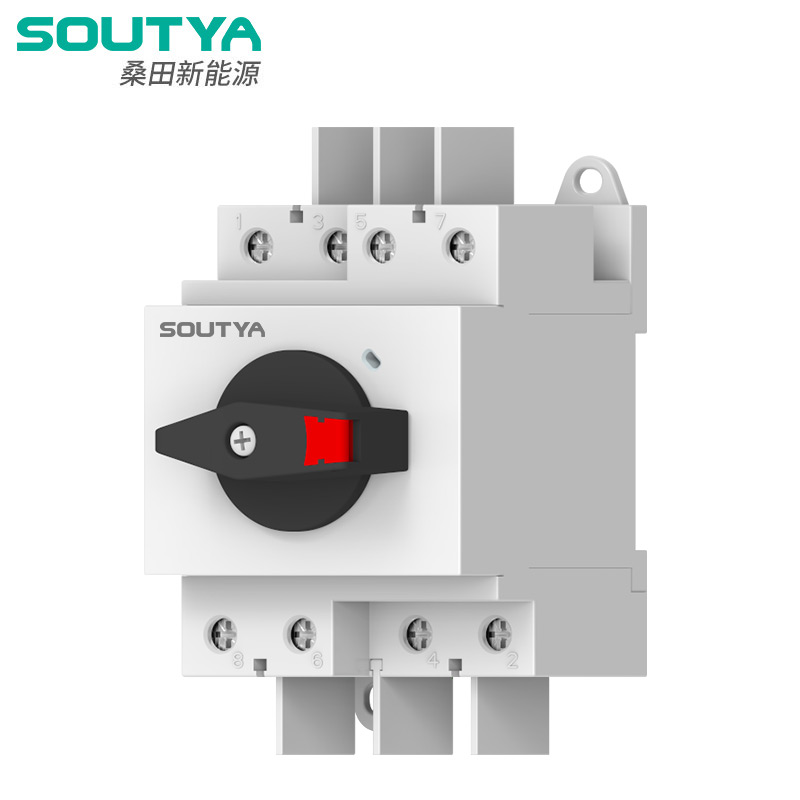
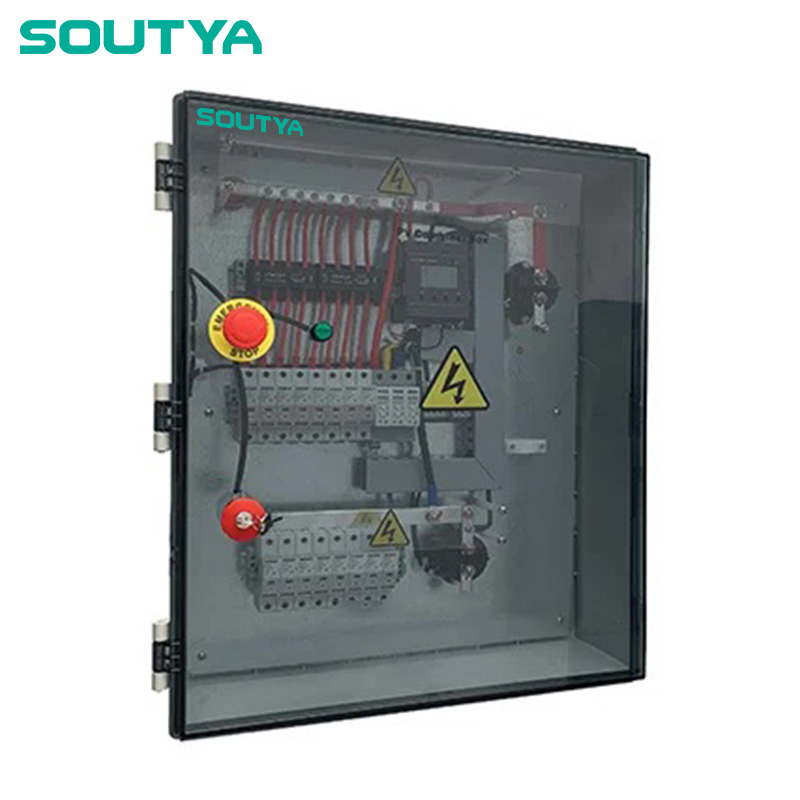
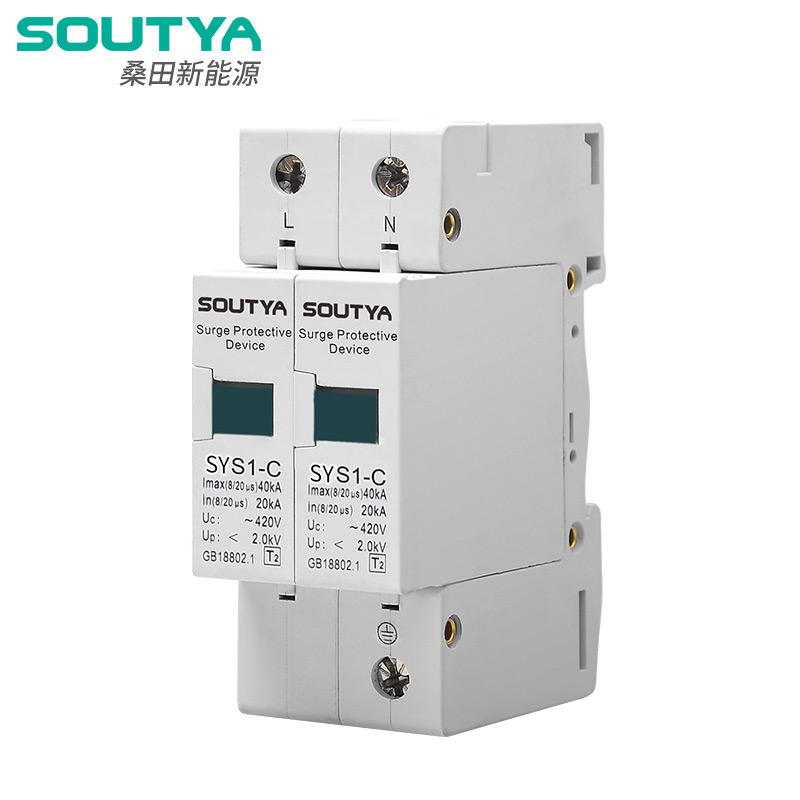
A 1000V DC Combiner Box 4 In 2 Out Isolator type is a critical component for large-scale photovoltaic (PV) systems. It combines four string inputs into two outputs while providing integrated isolation switches. This article explains the design, benefits, and selection criteria for this combiner box, with a focus on safety and efficiency. For more options, browse the Combiner Box category at Soutya, a trusted supplier in solar electrical equipment.
Key Points: 1000V DC rating, 4 inputs to 2 outputs, integrated isolator switch, IP65 enclosure, overcurrent protection, surge protection options.
A 1000V DC combiner box with 4 inputs and 2 outputs is an electrical enclosure that aggregates power from four PV strings into two main circuits. The “isolator type” means each input and output circuit includes a DC isolation switch (disconnect) that can manually break the circuit for maintenance or emergency shutdown. This combiner box is rated for 1000 volts DC, making it suitable for commercial and utility-scale solar installations where string voltages are high. Soutya’s model includes fuses or circuit breakers for overcurrent protection, optional surge protective devices (SPDs), and a robust enclosure rated IP65 for outdoor use.
A 4-in-2-out configuration strikes a balance between the number of strings and the number of inverters or charge controllers. In a medium-sized solar farm, grouping four strings into two outputs reduces the number of cables running to the inverter, lowering installation costs and cable losses. This configuration also simplifies fault detection: each output can be isolated independently, allowing partial system operation during maintenance. Compared to a 4-in-1-out box, the 2-out design provides redundancy—if one output fails, the other can still deliver power. This is valuable for critical power applications.
Integrated DC isolators allow technicians to safely disconnect the combiner box from the PV strings and from the inverter side. This is essential during installation, troubleshooting, or emergency response. The isolator is rated for DC switching, which is more demanding than AC due to the absence of a zero-crossing point. Soutya’s isolator type combiner box uses high-quality switches that meet IEC 60947-3 requirements for DC isolation., the box can be equipped with arc-fault detection (per UL 1699B) and SPDs (per IEC 61643-11) to protect against arc faults and lightning surges, enhancing overall system reliability.
Note: Always verify that the combiner box’s isolator has a DC rating equal to or higher than the system’s maximum open-circuit voltage. For a 1000V DC system, the isolator must be rated at least 1000V DC.
This combiner box is ideal for:
| Parameter | 4 In 2 Out Isolator Type | 4 In 1 Out Non-Isolator |
|---|---|---|
| Max DC Voltage | 1000V | 1000V |
| Number of Inputs | 4 | 4 |
| Number of Outputs | 2 | 1 |
| Isolation Switch | Yes (per input & output) | No |
| Enclosure Rating | IP65 | IP65 |
| Overcurrent Protection | Fuses or MCBs | Fuses only |
| Surge Protection | Optional SPD | Optional SPD |
| Weight | ~5 kg | ~3.5 kg |
, each input is rated for 15-20A, but this can vary. Check the datasheet of Soutya’s model for exact ratings.
No. The box is rated for 1000V DC maximum. For 1500V systems, you need a combiner box with corresponding rating.
It is not standard, but an optional AFCI module can be integrated. Contact Soutya for customization.
Soutya’s combiner boxes comply with IEC 62548, UL 1699B, and relevant parts of IEC 60947. They also have CE and RoHS marks.
For reliable and safe solar installations, choose the 1000V DC Combiner Box 4 In 2 Out Isolator type from Soutya. Visit the Soutya website for full specifications and to request a quote.
[1] IEC 62548:2016. Photovoltaic (PV) arrays – Design requirements.
[2] UL 1699B:2018. Photovoltaic (PV) DC Arc-Fault Circuit Protection.
[3] IEC 61643-11:2011. Low-voltage surge protective devices – Part 11: SPDs connected to low-voltage power systems.


Jack
Soutya