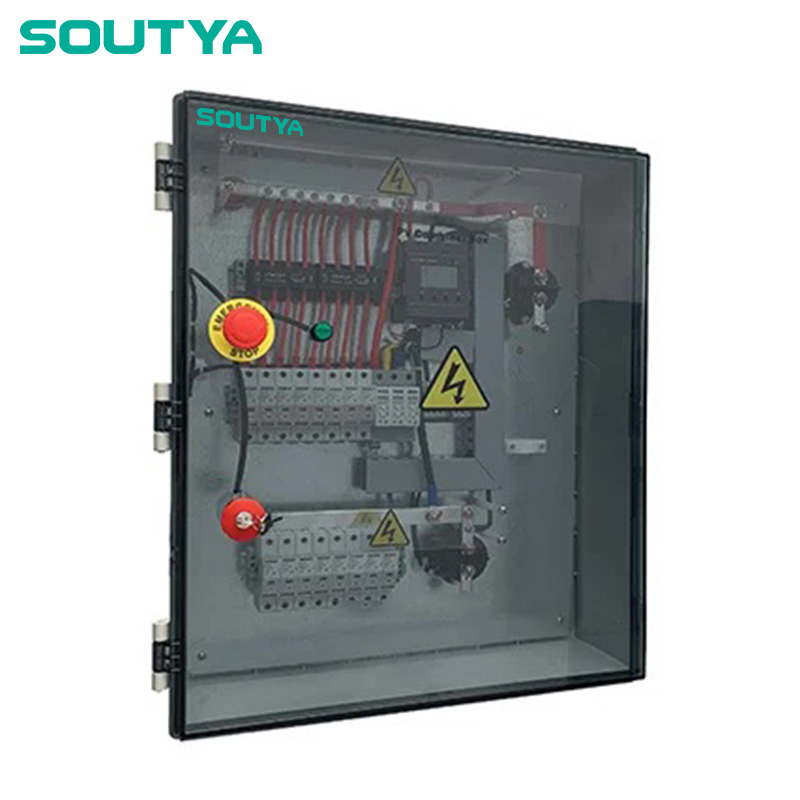
The DC AFCI combiner box 12 in 1 out from Soutya integrates arc fault circuit interruption (AFCI) with string combining in a single enclosure. This product reduces wiring complexity, enhances fire safety, and meets the latest DC arc fault protection standards for commercial photovoltaic installations. Learn how this device simplifies maintenance and ensures compliance with Soutya's DC AFCI combiner box.
A DC AFCI combiner box 12 in 1 out is a specialized enclosure that combines the output of up to 12 photovoltaic strings into a single DC bus while providing arc fault circuit interruption on each input. Unlike standard combiner boxes that only offer overcurrent protection (fuses or breakers), this unit continuously monitors for series and parallel DC arcs. When an arc is detected, it interrupts the circuit within milliseconds, preventing potential fires. Soutya's model integrates this protection into the combiner box, eliminating the need for separate AFCI devices at each string.
Photovoltaic systems are prone to DC arc faults due to loose connections, cable degradation, or rodent damage. Standard combiner boxes only protect against overcurrent; they cannot detect arcs. Adding discrete AFCI devices per string increases installation complexity and cost. By integrating AFCI into the combiner box, installers achieve:
This design aligns with requirements in IEC 60364-7-712 for DC arc protection in arrays above certain voltage thresholds.
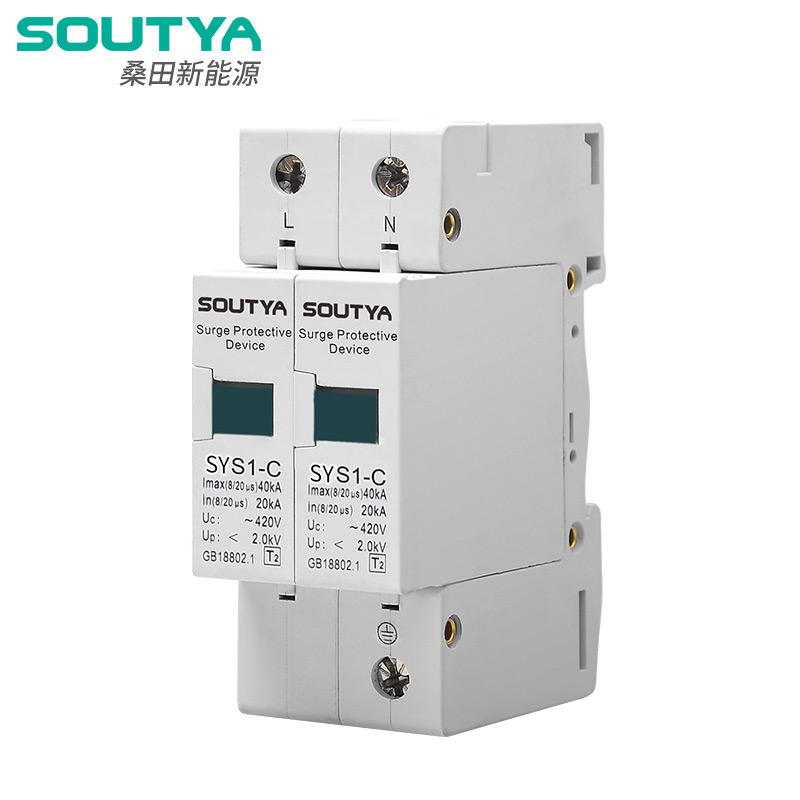
The Soutya DC AFCI combiner box 12 in 1 out accepts 12 pairs of PV string cables (positive and negative) via MC4 or comparable connectors. Each string passes through a dedicated arc fault sensor and a fuse holder (or circuit breaker). The sensors use advanced algorithms to distinguish between normal switching transients and dangerous arcs. When an arc is confirmed, a solid-state or electromechanical switch opens that specific string, isolating the fault while the other 11 strings continue to operate. The combined output is then fed to a single DC cable connected to the inverter. The unit also includes a surge protection device (SPD) and disconnect switch for maintenance safety.
Note: The arc detection algorithm in Soutya's AFCI combiner box is designed to ignore false triggers from inverter switching, cloud shadows, or load changes, achieving a trip accuracy >99.9% as per internal tests.
The 12 in 1 out DC AFCI combiner box is best suited for commercial and industrial PV systems where multiple strings converge at a central point. Typical applications include:
For systems with more than 12 strings, multiple boxes can be paralleled. The product is rated for up to 1000 V DC and supports string currents up to 15 A per input.
| Feature | Standard Combiner Box | Soutya AFCI Combiner Box 12 in 1 Out |
|---|---|---|
| Arc fault protection | No | Yes – per string |
| Inputs / Outputs | Up to 16 in / 1 out | 12 in / 1 out |
| Overcurrent protection | Fuses or breakers | Fuses + AFCI |
| Compliance | IEC 62548 only | UL 1699B, IEC 62548 |
| Centralized diagnostics | No | LED status per input |
| Installation time | High (multiple devices) | Low (one unit) |
Yes. Each input has an independent fuse rating, so strings with different currents can be combined as long as each stays within its fuse limit ( 15 A). The combined output must not exceed the main cable rating ( 200 A).
No. The detection algorithm uses time-frequency analysis to differentiate arc signatures from normal switching. The device has passed false-trip tests under inverter startup and grid transients.
Periodic visual inspection of indicator LEDs and cleaning of vents. The arc detection module is self-testing and has a 10-year design life.
Soutya's DC AFCI combiner box 12 in 1 out is designed to meet IEC 62548 and IEC 60364-7-712. Certification to UL 1699B is pending for North American markets.
For commercial installations requiring reliable arc fault protection and string combining, the Soutya DC AFCI combiner box 12 in 1 out delivers a space-saving, code-compliant solution. View product details and specs to see how it fits your next project.

Jack
Soutya