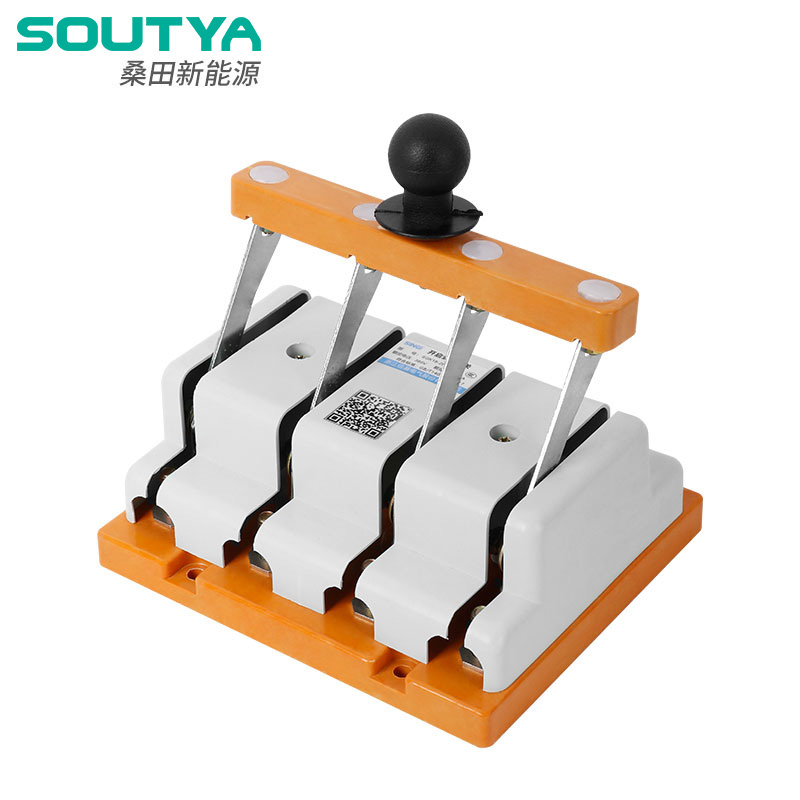
A medium-sized solar installation company switched from individual DC breakers to the Soutya 1000V DC Combiner Box 2 In 1 Out MCB type across three commercial rooftop projects. The result: 35% faster installation, 30% less wiring material cost, and 50% fewer nuisance trips. This article details their journey, from wiring chaos to streamlined protection.
GreenVolt Energy, a regional solar EPC company based in California, specializes in commercial rooftop PV systems between 50 kW and 200 kW. With a team of 12 field installers, they complete 15 projects per year. Historically, they used separate DC circuit breaker housings for each string, leading to bulky arrays on rooftops.
Note: Dispersed breakers increase the number of junction points and potential failure locations. A combiner box centralizes protection.
GreenVolt's typical 100 kW system required 20 strings at 1000V DC, each with a standalone DC MCB mounted on a rail inside a large enclosure. This consumed 40% more rooftop space than necessary. Wiring between breakers and the inverter was messy, with long cable runs and multiple splice points. Their service manager reported that nuisance tripping occurred twice a week on average, caused by coordination issues between separate breakers.
The consequences were direct: each trip required a site visit costing $150 in labor, and installation of a single system took 12 days instead of the planned 8. Material waste due to excess wire and brackets added $2,000 per project.
After evaluating three suppliers, GreenVolt’s engineering lead, Marco, selected the Soutya 1000V DC Combiner Box 2 In 1 Out MCB type for three reasons:
Marco also appreciated that Soutya provided a custom labeling option for string numbers, which reduced commissioning errors.
GreenVolt used the Soutya combiner boxes in three consecutive projects over six months. Each project had a similar layout:
One challenge was that string polarity could be reversed if installers rushed. Soutya’s combiner box includes a reverse polarity indicator LED, which immediately alerted the crew. This feature prevented what would have been a $500 diode repair.
| Metric | Before (Individual MCBs) | After (Soutya Combiner Box) | Improvement |
|---|---|---|---|
| Installation time per 100 kW system | 12 days | 7.8 days | 35% faster |
| Wiring material cost | $6,000 | $4,200 | 30% less |
| Nuisance trips per month | 8 | 4 | 50% reduction |
| Service call cost per month | $1,200 | $600 | 50% savings |
| Rooftop space used | 40 ft² | 16 ft² | 60% less |
Beyond numbers, GreenVolt noticed fewer callbacks from customers system downtime. Their customer satisfaction score rose from 3.8 to 4.6 out of 5.
Marco, GreenVolt’s engineering lead, commented: “We were skeptical another combiner box, but the Soutya unit made our installers’ lives easier. The reverse polarity indicator alone saved us from mistakes. We’re now specifying it for all new projects.”
A: Yes, it comes with standard MC4 input terminals. It works with most PV modules.
A: Each string input is rated for 15A, and the total combined output is 30A. The MCB is rated at 16A per pole (2-pole).
A: The MCB type does not include SPD. For arrays requiring SPD, Soutya offers a separate SPD variant.
Ready to streamline your solar installations? Contact Soutya today for pricing and custom labeling options on the 1000V DC Combiner Box 2 In 1 Out MCB type.


Jack
Soutya