News

What Is an AC Combiner Box 4 In 1 Out and Why Does It Matter

2026-08-06 0 Leave me a message

The AC Combiner Box 4 In 1 Out from Soutya aggregates four inverter AC output circuits into a single feeder, integrating circuit protection, surge protection, and optional monitoring in a compact IP65 enclosure. This guide for engineers and procurement teams explains how this Soutya combiner box works, where it fits in solar and storage projects, and which technical features to evaluate.

Article Outline

  • Definition and core function of an AC combiner box
  • Reasons for aggregating inverter outputs in commercial PV and storage systems
  • Soutya’s 4-in-1 AC combiner box design and safety features
  • Key protection, SPD, and monitoring criteria for specification
  • Comparison of common AC combiner box configurations
  • Buyer considerations, FAQ, and recommendations

What Exactly Is an AC Combiner Box 4 In 1 Out?

An AC combiner box is an electrical enclosure that receives AC power from multiple inverter or energy storage outputs and combines them into one outgoing circuit. The “4 in 1 out” designation means four input circuits are connected to one output feeder. The Soutya AC Combiner Box 4 In 1 Out is designed for three-phase or single-phase AC applications, depending on the configuration ordered.

Inside the enclosure, each input is protected by a dedicated miniature circuit breaker or molded-case circuit breaker, and the combined output is protected by a main breaker. A surge protective device (SPD) is installed to clamp transient overvoltages. Some versions include a monitoring module that measures current, voltage, and breaker status for remote supervision.

This type of box is installed on the AC side of string inverters in commercial and industrial (C&I) solar systems, as well as behind battery storage inverters. By grouping multiple inverter outputs into a single distribution path, the Soutya AC Combiner Box 4 In 1 Out reduces the number of downstream feeders, simplifies switchgear design, and lowers wiring complexity.

Why Do Commercial PV Systems Require AC Output Aggregation?

Commercial solar plants have dozens of string inverters spread across a rooftop or ground-mount area. Each inverter generates AC power that must reach a transformer or grid connection point. Running individual cables from every inverter to the central switchgear is expensive, labor-intensive, and creates unnecessary voltage drop.

An AC combiner box solves this by consolidating several inverter outputs at a strategic location. For example, a 4-in-1 unit allows four investor circuits to be aggregated locally, and a single larger cable then carries the combined current to the AC panelboard. This reduces cable quantity and trenching, lowers material costs, and shortens installation time.

Aggregation also improves operational flexibility. With individual input breakers, each inverter circuit can be isolated for maintenance without shutting down the entire array. This is important for C&I owners who expect high system availability. The AC Combiner Box 4 In 1 Out from Soutya provides this sectionalized isolation in a single weatherproof package.

How Does the Soutya 4-In-1 AC Combiner Box Strengthen System Safety?

Soutya designs the AC Combiner Box 4 In 1 Out with safety as a primary consideration. The enclosure is rated IP65, protecting internal components from dust and water jets. This makes the box suitable for outdoor rooftop or ground-level installations where weather exposure is unavoidable.

Overcurrent protection is provided on every input branch and the main output. Properly selected circuit breakers interrupt fault currents before they can damage cables or inverter components. The integrated SPD is a Type 2 device per IEC 61643-11, which is appropriate for the AC side of PV systems to protect against induced lightning surges and switching transients.

The internal busbar system is designed with adequate electrical clearance and creepage distances, reducing the risk of arcing. Soutya uses flame-retardant materials and copper busbars with tinned finish to maintain low resistance and minimize heat build-up. These details matter for long-term reliability, in high-ambient-temperature environments.

Which Protection and Monitoring Features Should Buyers Prioritize?

When specifying an AC combiner box, engineers and procurement managers should verify several parameters beyond the basic 4-in-1 topology.

  • Input/output ratings: Check the nominal voltage and current per input, plus the maximum combined output current. For AC combiner boxes, choose a main breaker current rating that exceeds the expected aggregate load with a safety margin.
  • Breaking capacity: The short-circuit breaking capacity (Icu) of the breakers must match the available short-circuit current at the installation point. IEC 60947-2 and IEC 60947-4-1 define test conditions for low-voltage switchgear.
  • SPD protection level: Verify the voltage protection level (Up) of the surge protective device. For AC systems, Up must be lower than the impulse withstand level of the inverters and downstream equipment.
  • Enclosure and terminations: Confirm IP rating, cable entry sizes, and terminal types. The box should accommodate the required conductor sizes and provide easy access for maintenance.
  • Monitoring option: If remote visibility is required, choose a model with power metering and status signaling. Soutya offers variants with RS485 communication or dry alarm contacts.

Design note: According to IEC 62548, which sets requirements for PV array electrical design, the arrangement of array and inverter circuits must include appropriate means of isolation and overcurrent protection. An AC combiner box is an integral part of this architecture on the inverter output side.

How Do 4-In-1 and Single-String AC Combiner Boxes Compare?

To help buyers decide, the table below compares a 4-in-1 AC combiner box, a 2-in-1 unit, and single-string direct wiring without a combiner.

Configuration Input Circuits Main Breaker SPD Best Use Case Relative Cost
Soutya 4-In-1 AC Combiner Box 4 Yes Yes Medium C&I sites with several string inverters Lower per-circuit than individual wiring
2-In-1 AC Combiner Box 2 Optional Yes Small systems or where only two inverter circuits are close Intermediate
Direct Wiring Without Combiner N/A N/A Separate Very small installations with a single inverter High if cable runs are long

The Soutya AC Combiner Box 4 In 1 Out provides the best balance for installations where three or four inverters are grouped in a cluster. It reduces enclosure count, simplifies maintenance, and centralizes surge protection.

Asked Questions

Q1. What is the difference between an AC combiner box and a DC combiner box?

A DC combiner box aggregates DC strings before the inverter, while an AC combiner box aggregates AC outputs from inverters. The protection, breaker types, and SPD specifications differ due to voltage and current characteristics. The Soutya product line covers both, and the AC Combiner Box 4 In 1 Out is for the AC side.

Q2. Can the 4-in-1 AC combiner box be used with three-phase inverters?

Yes. The 4-in-1 configuration refers to the number of input circuits, not the number of phases. Soutya can provide single-phase or three-phase versions to match the inverter output and grid connection requirement.

Q3. What standards does the Soutya AC Combiner Box comply with?

The design follows the general requirements of IEC 61439 series for low-voltage switchgear assemblies, and the SPD component is tested per IEC 61643-11. For PV applications, installation should follow IEC 62548 guidelines.

Q4. Is the AC Combiner Box 4 In 1 Out suitable for outdoor installation?

Yes. The IP65 enclosure is designed for outdoor exposure. Cable entries are fitted with IP-rated glands, and the enclosure includes a drain hole to prevent condensation build-up.

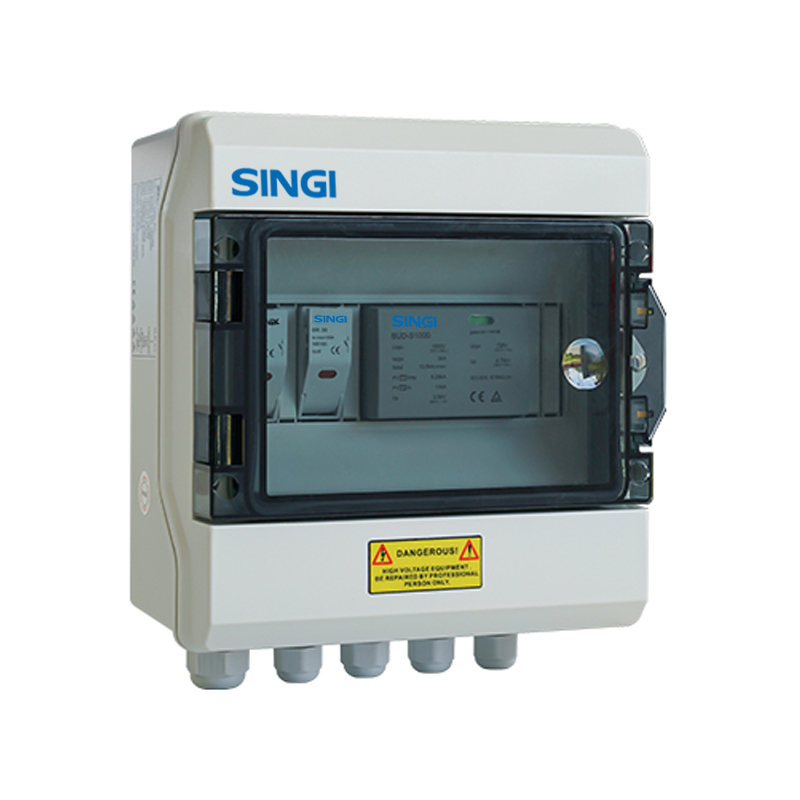
Soutya AC Combiner Box 4 In 1 Out enclosure with circuit breakers and SPD

References

[1] IEC 62548:2016. Photovoltaic (PV) arrays — Design requirements [S]. International Electrotechnical Commission, 2016.

[2] IEC 61643-11:2011. Low-voltage surge protective devices — Part 11: SPDs connected to low-voltage power systems [S]. International Electrotechnical Commission, 2011.

[3] Zhou L, Li H, Zhang X. Arc Fault Detection Technology in Low-Voltage Distribution Systems: A Review [J]. IEEE Transactions on Power Delivery, 2022, 37(4): 2789-2801.

For reliable AC output aggregation in your solar or storage project, choose the Soutya AC Combiner Box 4 In 1 Out. It is engineered to meet IEC-based safety requirements, reduce installation cost, and ensure decades of dependable service. Contact the Soutya sales team to request a specification sheet or discuss custom configurations.

Related News
Leave me a message
X
We use cookies to offer you a better browsing experience, analyze site traffic and personalize content. By using this site, you agree to our use of cookies.Privacy Policy
RejectAccept