News

How a 1.2 MW Rooftop Solar Project Cut Grid Connection Time by 35%

2026-08-10 0 Leave me a message

How a 1.2 MW Rooftop Solar Project Cut Grid Connection Time by 35%

Customer Background

A mid-sized beverage manufacturer in Zaragoza, Spain, operates two bottling lines and an automated warehouse, consuming 2.8 GWh of electricity per year. Rising energy costs and corporate sustainability targets pushed the company to install a 1.2 MW rooftop photovoltaic system intended to cover 35% of annual consumption. The plant's existing electrical infrastructure provided limited space for additional switchgear, and the local distribution grid operator mandated a single, integrated grid connection point.

What Challenges Did the Facility Face?

The project team found that assembling a grid connection point from separate components created avoidable complexity. A general-purpose AC breaker, a stand-alone meter panel, a communication gateway, and an overvoltage protector were specified from different suppliers. Each device arrived with its own enclosure, cabling requirements, and technical data sheet. The lack of integration meant the electrical room layout had to be revised twice, and the utility reviewer rejected the design twice because it did not meet IEC 60364-7-712 isolation and overvoltage requirements. Eight weeks of schedule were lost, and the estimated cost for re-engineering and extra accessories increased by 18%.

The financial impact was direct. The delay postponed the solar plant connection by two months, which meant the company continued paying grid electricity tariffs for that period instead of using the solar generation. The penalty clause in the EPC contract added further pressure to resolve the equipment issue .

Why Did the Team Choose the Soutya PV Grid-Connected Cabinet?

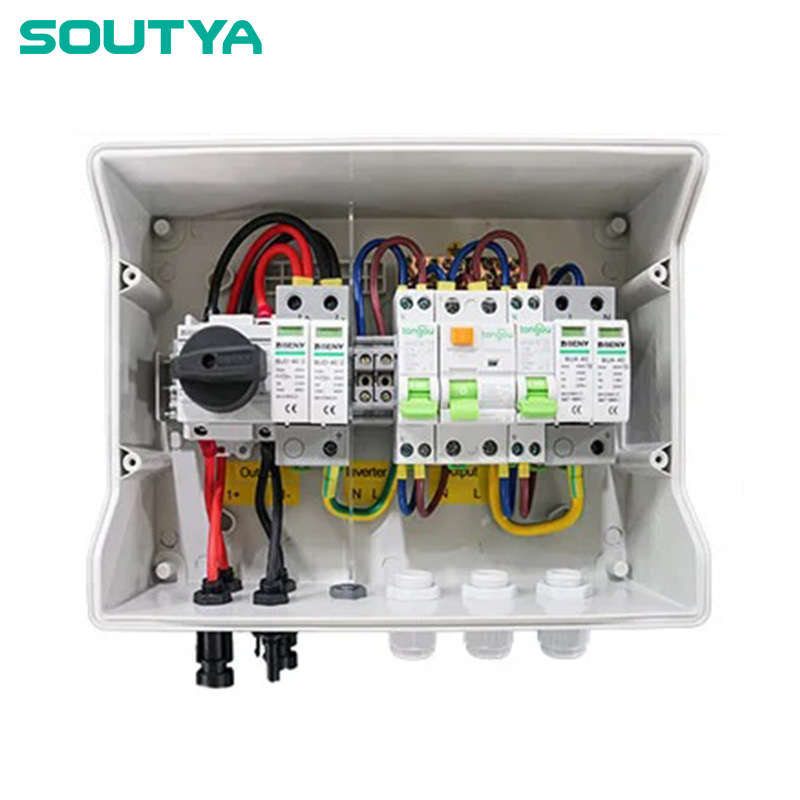
After evaluating three alternatives, the engineering team selected the Soutya PV Grid-connected Cabinet. The unit integrates AC circuit protection, Type 2 surge protection, precision energy metering, and a remote-control interface in a single pre-assembled enclosure. It is factory-tested, carries a declared short-circuit rating that matches the utility substation parameters, and includes a visible lockable disconnect switch. These features satisfied the local safety inspection without custom engineering.

A key decision factor was compliance documentation. The cabinet was designed to align with IEC 62548 for photovoltaic array protection and IEC 60364-7-712 for low-voltage installations. The manufacturer provided a complete declaration of conformity and test reports, allowing the engineering team to submit the connection application without performing additional type testing or calculations. This reduced the risk of another rejection and shortened the internal review cycle.

How Was the Cabinet Implemented?

The equipment was ordered in the third week of the revised project schedule. Delivery from the Souya factory in China took three weeks. Installation by the local electrical contractor took one day, with two Soutya technicians supervising on site. The cabinet was mounted on a concrete pad beside the existing low-voltage switchboard. The DC side was connected to the string combiner via a 120-meter cable, and the AC output was wired to the utility's transformer. The communication gateway was paired with the plant's SCADA system without needing a separate protocol converter.

During commissioning, the utility's meter test team identified a mismatch between the metering current transformer ratio and the connected load. The Soutya field engineers adjusted the cabinet's internal settings and re-validated the measurement accuracy within two hours. This quick response prevented a second permit resubmission, which would have added at least two more weeks to the project.

What Quantified Results Followed?

Nine months after connection, the system has had no unplanned disconnections. The grid connection approval process fell from 14 weeks to 9 weeks, a 35% reduction. The total installed cost for the grid connection point was $18,500, compared with the initial separate-component estimate of $23,000, a 19.5% saving. The integrated data interface eliminated the separate gateway, saving an additional $600 in hardware and $300 in labor. Energy metering accuracy was verified at 0.2%, giving the plant reliable data for its energy management reports. The system has logged 99.9% uptime, with one planned maintenance outage of four hours.

The shorter approval cycle also lifted project cash flow. The solar plant began generating three months earlier than projected, which added revenue that offset the earlier engineering costs. The plant's energy manager now uses the cabinet's information output in the monthly sustainability report.

Client Testimonial

“Switching to the Soutya cabinet removed the hardest part of the permit process. The unit was ready for approval, and the installer got us through the utility review two months faster than our first design. Having one monitored device for the entire grid connection is also valuable for our maintenance team.” — Carlos Méndez, Facilities Manager

Lessons and Recommendations

Three practical takeaways emerge from this project. First, start grid connection discussions with the utility early and confirm whether an integrated cabinet is acceptable before developing a custom panel. Second, select equipment with documented compliance to international standards such as IEC 60364-7-712 and IEC 62548. Third, ask the manufacturer to provide commissioning support on site; interface problems surface at the utility inspection stage, and a technical response can prevent a lengthy resubmission.

If the project were repeated, the engineering team would bring the utility's technical reviewers into the equipment selection step, instead of waiting until after the design was submitted. That earlier involvement might have avoided the first non-compliance report altogether.

Relevant Industry Standards: IEC 60364-7-712:2017 (Low-voltage electrical installations — Solar PV power supply systems), IEC 62548:2016 (Photovoltaic arrays — Design requirements).

PV Grid-connected Cabinet

Related News
Leave me a message
X
We use cookies to offer you a better browsing experience, analyze site traffic and personalize content. By using this site, you agree to our use of cookies.Privacy Policy
RejectAccept