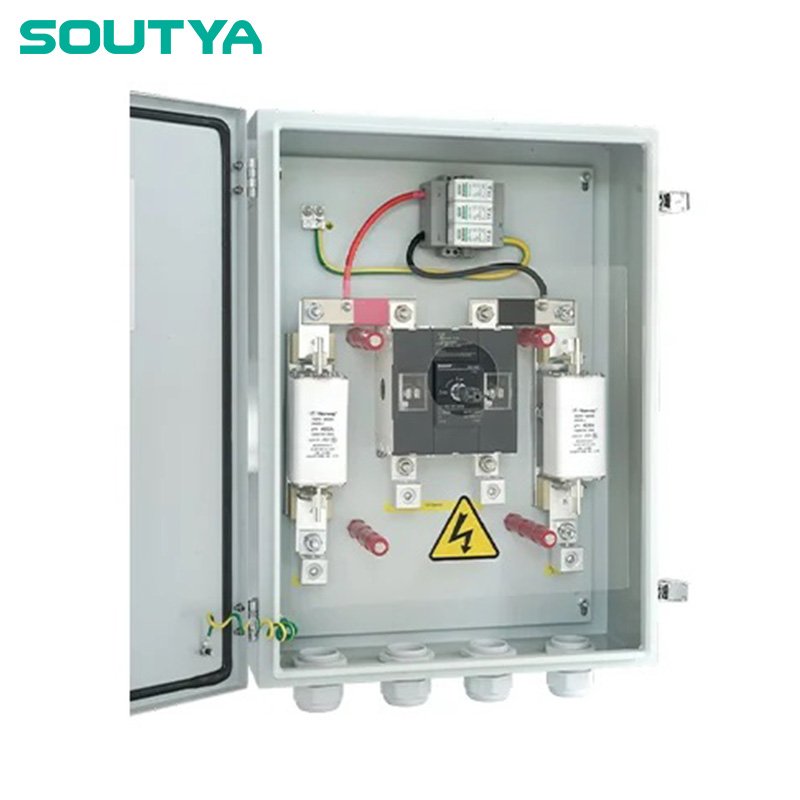
A 1000V DC Combiner Box 1 In 1 Out Isolator Type is a protective enclosure that connects one photovoltaic string input to one output circuit. It contains a DC-rated isolator switch that allows operators to manually disconnect the solar array from the inverter or charge controller. Rated at 1000 volts DC, this box is tailored for modern commercial PV systems where string voltages reach 600V, 800V, or 1000V.
Unlike larger combiner boxes that merge many strings, this single-channel design suits small systems, string inverters, or as a sub-combiner for one section of a larger array. The isolator type focuses on safe switching and isolation, not on current aggregation.
Every PV string requires a means of disconnection for maintenance, fault clearing, and emergency shutdown. A dedicated 1000V DC combiner box with an isolator switch provides a single, safe point where the DC circuit can be opened. Without it, technicians must rely on the inverter's internal disconnect or physically unplug connectors, both of which are less safe under load.
Many installations also need overcurrent protection in the form of fuses or DC circuit breakers inside the box. This model can be configured with appropriate fuses to protect the cable and connected equipment from short-circuit currents. The 1-in/1-out format keeps the design simple and reduces cost while still meeting the core requirement of safe isolation.
| Feature | 1-In-1-Out Isolator Box | Multi-String Combiner Box |
|---|---|---|
| Input capacity | Single string | Multiple strings (4, 8, 12, etc.) |
| Typical application | Small arrays, string inverters, sub-array disconnects | Large arrays, central inverters |
| Isolation | Built-in DC isolator | Depending on model, may have fuse and circuit breaker |
| Cost | Lower | Higher |
| Complexity | Minimal | Higher |
DC arcs are continuous and difficult to extinguish compared to AC arcs, which naturally cross zero. A correct DC isolator must provide a positive air gap, rapid contact opening, and arc suppression. The Soutya 1000V DC combiner box 1 in 1 out isolator type uses a switch rated for DC loads, ensuring that when the handle is opened, the circuit breaks cleanly and an arc cannot sustain.
In addition, the isolator is interlocked with the enclosure cover in some designs, preventing the door from being opened while the switch is in the ‘ON’ position. This layer of protection reduces the risk of electric shock during inspection or maintenance.
Solar systems with string voltages above 500V are now standard. A 1000V DC combiner box is required in commercial rooftops, carports, small ground-mount plants, and storage-coupled DC systems where the array operates at high DC voltage. The 1-in/1-out isolator box is useful when each PV string needs a local disconnect before entering a central combiner or inverter.
It is also used in DC-coupled battery storage applications to isolate the PV input from the DC bus. The compact form factor allows mounting near the array or inside an existing electrical room, reducing cabling lengths and voltage drop.
When selecting a 1000V DC combiner box, verify the following parameters:
Soutya manufactures the 1000V DC combiner box with a robust metal or engineering-grade plastic enclosure that resists UV, corrosion, and mechanical impact. The internal copper busbars and wiring terminals are sized to minimize heat generation at rated current. The DC isolator is sourced from established switchgear manufacturers and tested for thousands of mechanical operations.
Every Soutya combiner box undergoes routine quality checks, including insulation resistance testing, contact resistance measurement, and voltage withstand testing. This focus on manufacturing consistency is why Soutya products are trusted by installers and EPC contractors in solar projects across different climates.
Engineers should reference the following standards when specifying this product:
These standards provide the technical basis for installing and testing DC combiner boxes in grid-connected and standalone PV systems.
No. The 1-in-1-out design is intended for a single string or source circuit. For multiple strings, use a multi-input combiner box that safely fuses and combines the outputs.
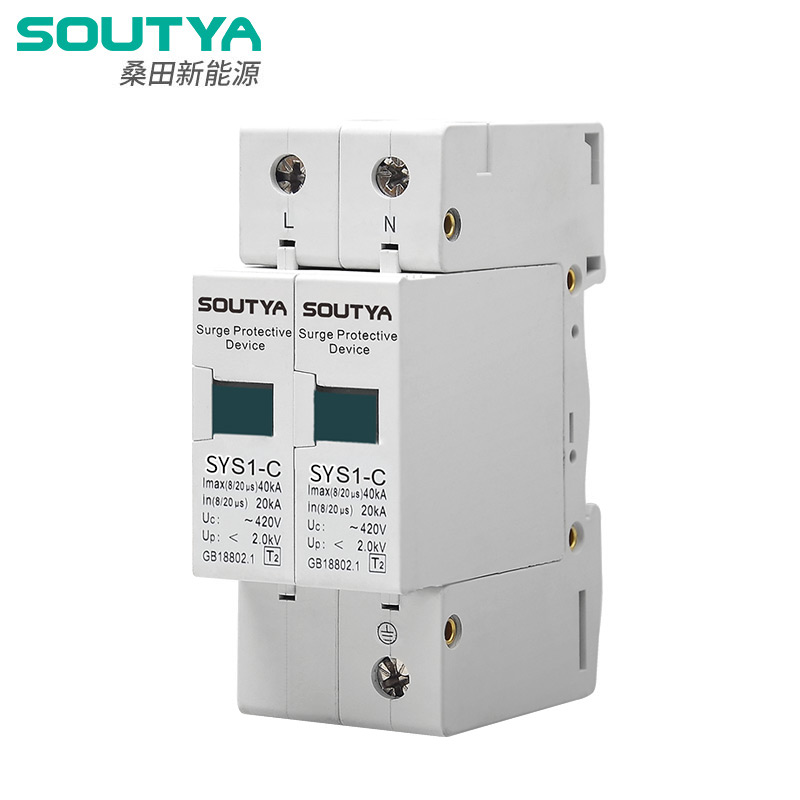
It depends on the configuration. The base model is an isolator board, but fuses and SPDs can be added as factory options. Always confirm the exact bill of materials with the supplier.
An isolator is a load-break switch for manual disconnection. A circuit breaker also provides automatic overload and short-circuit protection. If automatic protection is needed, request a breaker-type combiner box or add appropriate fuses.
Mount it close to the PV strings, follow the manufacturer’s wiring diagram, and ensure all DC cable glands are properly tightened. The enclosure must be properly earthed according to local electrical codes.
[1] IEC 62548:2016. Photovoltaic (PV) arrays – Design requirements [S]. 2016.
[2] IEC 61643-11:2011. Low-voltage surge protective devices – Part 11: SPDs connected to low-voltage power systems [S]. 2011.

Jack
Soutya