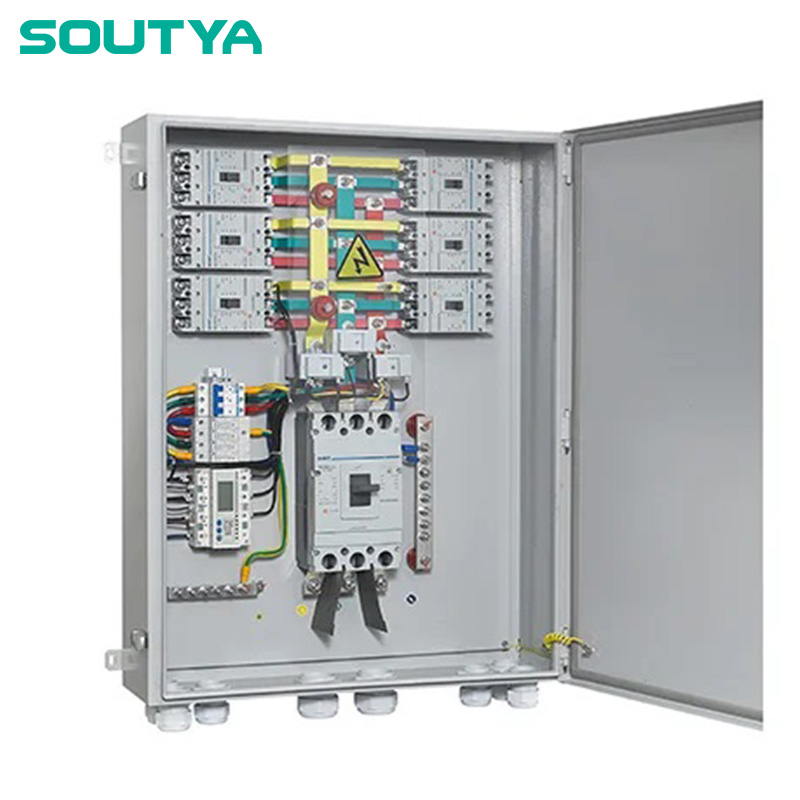
A 220 MW battery energy storage system (BESS) facility in Southeast Asia faced a recurring problem: every routine inspection of its DC isolator switches forced a full shutdown of a battery cluster. Each window cost hours of lost revenue and created scheduling conflicts with the grid operator. By replacing 36 conventional load-break switches with the Soutya DC Drawout-Type Isolator Switch, the facility cut maintenance downtime on each isolation point by 60%, reduced annual operations costs by $25,000, and eliminated arc-related incidents for two consecutive quarters.
The facility is a grid-scale BESS plant supplying frequency regulation and peak-shaving capacity to a regional utility. Its DC switchgear room contains multiple battery racks feeding power conversion systems through 1,000 V DC busbars. The plant operates 24/7, and the utility contract allows only four maintenance windows per year, each capped at six hours.
The plant’s electrical engineering team manages over 200 isolator switches across four battery clusters. Before the upgrade, the maintenance procedure for a single switch required disconnecting the string, racking out an entire withdrawable chassis, and physically handling heavy copper busbars. The process was labor-intensive and prone to misalignment when reinserting the chassis.
During the plant’s first year of operation, every quarterly inspection exposed the same limitations:
These issues translated into operational risk. The plant lost roughly $38,000 in avoided penalties and missed market opportunities during the first three scheduled inspections. In addition, the plant’s safety documentation flagged arc-flash exposure as a high-priority risk, because existing switches had no clear break indication.
The engineering team evaluated three options: a traditional fixed-mount DC isolator switch with interlocked covers, a motorized load-break switch, and a drawout-type isolator switch with visible contact gaps. The first option did not solve the shutdown problem. The second option introduced auxiliary supply requirements and a higher failure point.
The Soutya DC Drawout-Type Isolator Switch was selected for a different reason: it allows the switching element to be drawn out while the busbar remains energized and secured behind an internal shutter. This design eliminates the need to shut down the entire battery cluster. Its arc-extinguishing contacts are designed for low-voltage DC circuits up to 1,000 V, and the switch provides a clear, mechanically interlocked indication of contact position.
The plant manager also noted that Soutya’s product line follows the performance expectations outlined in IEC 60947-1 and GB/T 14048.1-2019, giving the engineering team confidence in the device’s electrical endurance and thermal behavior under repeated operations.
The replacement project took eight weeks from initial engineering review to full deployment.
A typical challenge during implementation was aligning the drawout mechanism with existing cable compartments in one older section of the switchgear room. The Soutya unit’s guide rails were adjustable, which allowed the integration team to recalibrate the alignment within half a day. One older switchboard required a small busbar spacer, but no major redesign.
After the first full quarter of operation, the facility recorded the following outcomes:
The improved confirmation of contact position also reduced human error. In the previous system, there was no clear way to check that the switch was fully open. Now, an integrated position indicator gives service technicians an immediate visual confirm before they open any bay door.
“The Soutya DC drawout switch solved the problem we struggled with for over a year,” said the facility’s electrical maintenance supervisor. “Our technicians can now isolate a single string safely and check the visible contact gap before starting work. The time savings were immediate, and the switch feels more robust.”
Facilities operating DC switchgear can draw several lessons from this project:
If the project began again, the engineering team says they would install the drawout-type isolator switches from the very start of the plant’s construction, than retrofitting them after the first year. The extra design margin and simpler terminal arrangement would have made the original commissioning faster and improved the facility’s readiness for future capacity expansions.
IEC 60947-1. Low-voltage switchgear and controlgear - Part 1: General rules [S]. 2020.
GB/T 14048.1-2019. Low-voltage switchgear and controlgear - Part 1: General rules [S]. 2019.


Jack
Soutya