This article covers the essentials of 1000V DC combiner box selection for photovoltaic systems, focusing on the 3 in 1 out MCB type offered by Soutya. It explains why such a device is critical for string combining, what technical parameters matter, and how to ensure reliable operation in high-voltage DC environments.
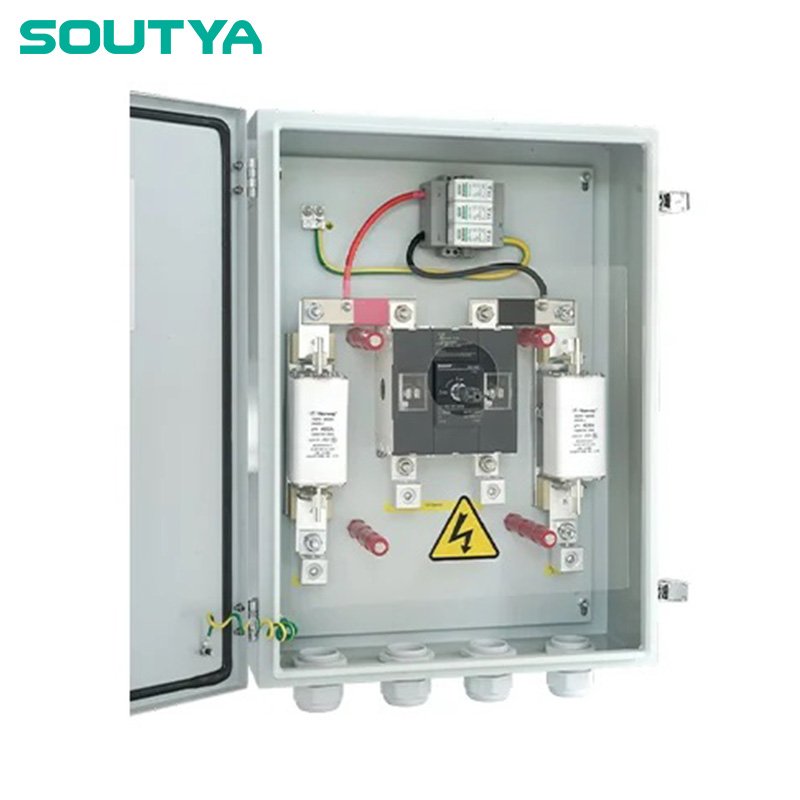
Modern solar farms and commercial rooftops operate at 1000V DC to reduce cable losses and balance-of-system costs. A 1000V DC combiner box consolidates the output of multiple PV strings into a single feeder before connection to an inverter or charge controller. This simplifies wiring, improves fault isolation, and centralizes overcurrent protection. According to IEC 62548:2016, proper string combing with approved enclosures is mandatory for array safety.
When multiple strings are paralleled, reverse current can flow from one string into another during shading or module failure. Without overcurrent protection, this can cause overheating and fire., DC arcs are difficult to extinguish, so the combiner box must include devices that can safely interrupt fault currents. The 3 in 1 out MCB type addresses these challenges by providing a dedicated miniature circuit breaker for each input string, offering both overcurrent and short-circuit protection.
Note: Even with MCB protection, ensure that the combiner box is rated for DC applications and has a sufficient breaking capacity (e.g., 6-10 kA at 1000V DC).
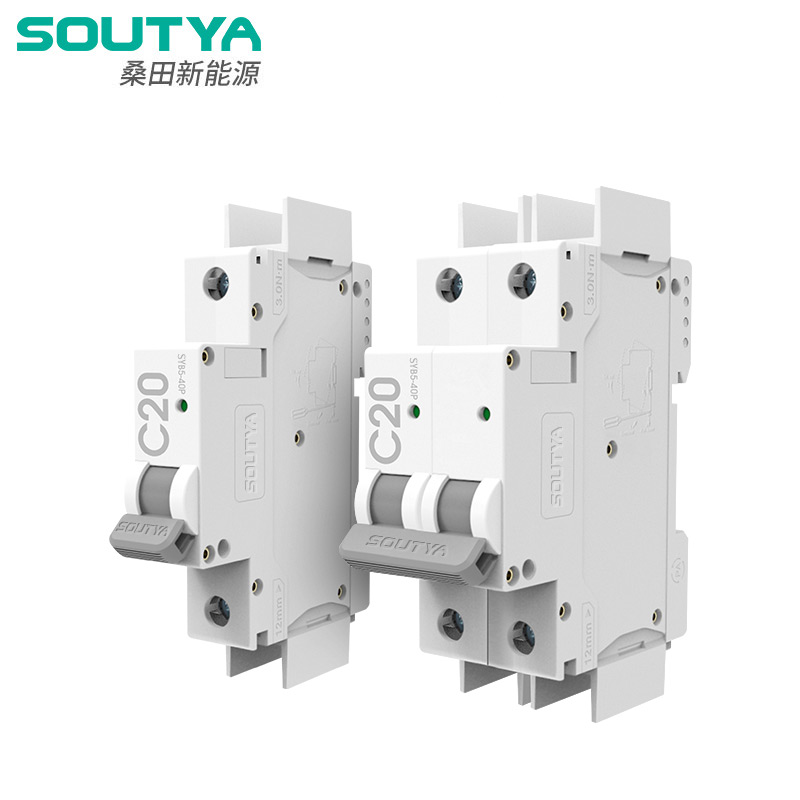
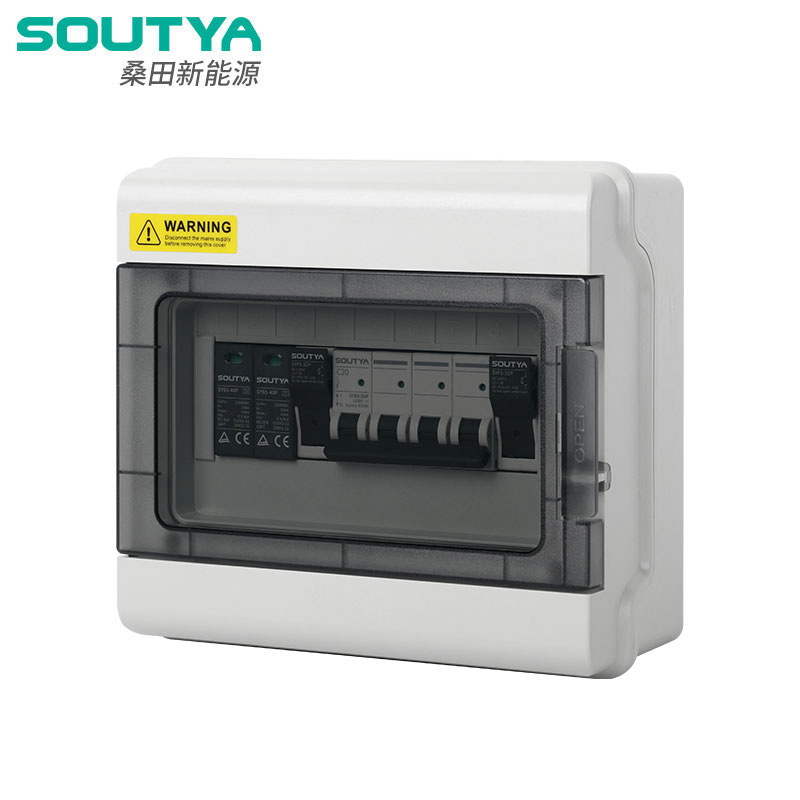
The “3 in 1 out” configuration means three input strings are combined into one output, each protected by an individual MCB. This design allows for selective isolation: if one string faults, the other two continue operating. The MCB type provides thermal-magnetic trip characteristics suitable for DC photovoltaic circuits. Soutya’s 1000V DC combiner box uses high-quality DC MCBs that comply with UL 1699B and IEC 60947-2 standards, ensuring reliable arc interruption. This results in higher system uptime and reduced downtime costs.
| Feature | MCB-Type Combiner Box | Fuse-Based Combiner Box |
|---|---|---|
| Protection Device | DC Miniature Circuit Breaker | DC Fuse + Disconnect |
| Resetability | Yes (manual reset) | No (replace fuse) |
| Selective Coordination | Easy with adjustable trip curves | Requires careful fuse selection |
| Arc Extinction in DC | Strong magnetic blowout | Limited |
| Cost Over Lifecycle | Lower (no replacement parts) | Higher (fuse replacement) |
When evaluating a 1000V DC combiner box, check these parameters:
Buyers should also confirm the combiner box includes surge protective devices (SPDs) as recommended by the standard.
Periodic inspection of the 1000V DC combiner box is essential. Check for:
If the combiner box includes an SPD, verify its end-of-life indicator. Replace SPD modules after a surge event or as per manufacturer intervals.
A: No. Each combiner box has a maximum voltage rating. Using a 1000V box in a 1500V system violates safety standards and voids certification.
A: MCBs are resettable and provide faster fault response, while fuses must be replaced after each operation. MCB-type combiner boxes reduce downtime and spare part inventory.
A: The MCB rating should be 1.25–1.56 times the string short-circuit current (Isc) per IEC 62548. For typical 10A Isc, choose 15A or 16A MCB.
For a reliable 1000V DC combiner box 3 in 1 out MCB type, explore Soutya’s product page for detailed specifications and certifications.
[1] IEC 62548:2016. Photovoltaic (PV) arrays – Design requirements. International Electrotechnical Commission.
[2] IEC 60947-2:2020. Low-voltage switchgear and controlgear – Part 2: Circuit-breakers.
[3] UL 1699B:2018. Photovoltaic (PV) DC Arc-Fault Circuit Protection. Underwriters Laboratories.

Jack
Soutya