News

How Does a 240-720kW DC Flexible Charging Pile Support Large-Scale EV Charging Projects?

2026-06-07 0 Leave me a message
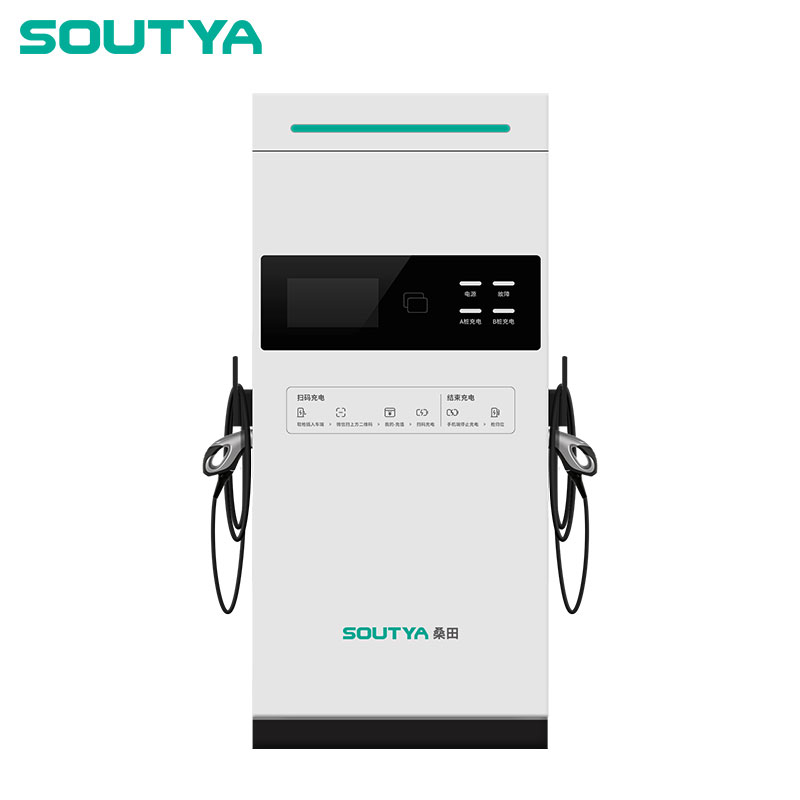
240-720KW DC Flexible Charging Pile

This article explores the role of the 240-720kW DC flexible charging pile in modern EV charging infrastructure. Designed for commercial, fleet, and high-traffic public stations, these units offer scalable power output and multi-gun flexibility. Whether you're an engineer, procurement specialist, or station developer, understanding the technical and operational advantages of flexible charging piles is essential for project success. For a full lineup, visit the Soutyaele product page.

This guide covers the key aspects of 240-720KW DC Flexible Charging Pile, including its features, selection criteria, applications, and industry best practices.

Table of Contents

  • What Is a 240-720kW DC Flexible Charging Pile and Why Does It Matter?
  • Why Do High-Power Charging Projects Require Flexible Charging Solutions?
  • How Does the Power Range of 240–720kW Benefit Different Applications?
  • Which Technical Features Should Engineers Evaluate in a Flexible Charging Pile?
  • How Can Buyers Compare Different Models in the 240–720kW Range?
  • What Installation and Deployment Considerations Are Critical for Success?

What Is a 240-720kW DC Flexible Charging Pile and Why Does It Matter?

A 240-720kW DC flexible charging pile is a high-power electric vehicle supply equipment (EVSE) that can dynamically allocate power across multiple charging points. Unlike fixed-power chargers, flexible piles allow operators to adjust output per gun, enabling simultaneous charging of several vehicles with varying power demands. This technology is critical for stations that need to serve a mix of passenger cars, vans, and heavy-duty trucks without expensive infrastructure upgrades.

The flexibility comes from intelligent power modules and software-controlled distribution. For example, a 480kW cabinet can deliver 120kW each to four vehicles, or 240kW to one and 80kW each to three others. This adaptability reduces idle time and improves asset utilization, directly impacting return on investment.

According to IEC 60947-1 (General Rules for Low-Voltage Switchgear), all power distribution components must meet specific safety and performance criteria. Flexible charging piles integrate such components, ensuring compliance with international standards.

Why Do High-Power Charging Projects Require Flexible Charging Solutions?

Traditional fixed-power chargers often lead to underutilization or capacity bottlenecks. In a depot charging scenario, buses may need high power for short turnaround, while employee vehicles can charge at lower rates overnight. A flexible charging pile solves this by adjusting power in real time based on vehicle connection and battery state of charge. This not only optimizes energy use but also reduces peak demand charges, a major operational cost.

Furthermore, as battery capacities increase and ultra-fast charging becomes common, stations must future-proof their investments. A 240-720kW flexible system can scale with new vehicle generations without replacing the hardware. The modular design allows adding power modules as needed.

Reference standards such as IEC 60947-2 (Circuit-breakers) ensure that the internal protection devices can handle the dynamic loads encountered in flexible charging scenarios.

How Does the Power Range of 240–720kW Benefit Different Applications?

The 240–720kW power range covers three primary use cases:

  • 240–360kW: Suitable for small fleet depots, gas station retrofits, or highway rest stops with moderate traffic. Typically supports 4–6 charging points.
  • 480kW: Ideal for larger fleets (e.g., delivery trucks) and busy public fast-charging hubs. Can serve 6–8 vehicles simultaneously.
  • 600–720kW: Designed for heavy-duty trucks, buses, and hyper-fast charging stations. Often used with liquid-cooled cables to manage thermal loads.

Operators can choose the base power and later upgrade by adding modules, making the investment scalable. The flexibility also allows sharing power between CCS, CHAdeMO, and GB/T connectors via a single cabinet.

Which Technical Features Should Engineers Evaluate in a Flexible Charging Pile?

Engineers should prioritize the following when selecting a DC flexible charging pile:

  • Power Module Efficiency: Look for >96% efficiency under full load to minimize energy loss.
  • Dynamic Power Allocation: The control algorithm must balance load without interruptions.
  • Protection Systems: Overcurrent, overvoltage, and thermal protection per IEC 60947-2 and IEC 60947-3.
  • Connectivity: OCPP 1.6/2.0 support, open APIs for integration with energy management systems.
  • Cooling System: Intelligent air or liquid cooling to maintain performance in harsh climates.
  • Cable Management: Lightweight or cooled cables for ease of use.

Additionally, compliance with IEC 61851-23 for conductive charging systems ensures interoperability with global EV models.

How Can Buyers Compare Different Models in the 240–720kW Range?

Use a structured comparison table to evaluate key parameters side by side:

Parameter Model A (360kW) Model B (480kW) Model C (720kW)
Max Power per Gun 180kW 240kW 360kW (with liquid cooling)
Number of Charging Points 4 6 8
Input Voltage AC 380V±15% AC 380V±15% AC 380V±15%
Cooling Type Air-cooled Air-cooled Liquid-cooled
Operating Temperature -20°C to 50°C -20°C to 50°C -30°C to 55°C
Compliance IEC/UL/CE IEC/UL/CE IEC/UL/CE

When comparing, consider total cost of ownership (TCO) including installation, maintenance, and energy losses. Flexible piles with higher intelligence reduce demand charges and offer better load management, which can offset higher initial costs.

What Installation and Deployment Considerations Are Critical for Success?

Deploying a high-power charging system requires careful planning:

  • Utility Coordination: Verify available grid capacity and transformer sizing. 720kW may require a dedicated 1MVA transformer.
  • Cabling & Protection: Use correctly rated cables and breakers per IEC 60898-1 for overcurrent protection.
  • Physical Layout: Ensure adequate space for cabinet, cooling, and cable routing. Leave room for future expansion.
  • EMS Integration: Connect the charging pile to an energy management system to optimize solar or battery storage usage.
  • Local Permits: Obtain necessary electrical and building permits; involve certified electricians.

Proper installation prevents downtime and ensures safety. The supplier should provide detailed commissioning support and compliance documentation.

Frequently Asked Questions

Q: Is a higher-power flexible charging pile always better?

A: Not necessarily. The optimal power depends on your fleet’s charging profile, dwell time, and grid capacity. Oversizing can lead to underutilization and higher upfront costs.

Q: Can a 240-720kW DC flexible charging pile handle both low-voltage and high-voltage EVs?

A: Yes, most modern flexible piles have a wide output voltage range (e.g., 150VDC–920VDC) to accommodate 400V and 800V architectures.

Q: What kind of maintenance does a DC flexible charging pile require?

A: Routine maintenance includes cleaning filters, checking cable integrity, updating firmware, and testing protection devices. Annual thermal imaging is recommended for high-power connections.

Q: How quickly can I expand from 240kW to 720kW?

A: If the cabinet is modular, adding power modules can be done within hours. Ensure your site transformer and wiring are sized for the final power.

Q: Are these piles compatible with all EV charging standards?

A: They support CCS, CHAdeMO, and GB/T via interchangeable cable sets. Check with the manufacturer for specific connector options.

Conclusion: Choose a Proven Flexible Charging Solution for Your Project

The 240-720kW DC flexible charging pile is a cornerstone of modern EV charging infrastructure, offering scalability, efficiency, and adaptability. For engineers, procurement teams, and project developers, selecting a unit with robust protection, intelligent power distribution, and compliance with international standards like IEC 60947-1, IEC 60947-2, and IEC 60947-3 ensures long-term reliability. To explore a complete range of flexible charging piles and get detailed specifications, visit Soutyaele’s product page and consult with their technical team for a tailored solution.

References

  1. IEC 60947-1. Low-voltage switchgear and controlgear - Part 1: General rules [S]. 2020.
  2. IEC 60947-2. Low-voltage switchgear and controlgear - Part 2: Circuit-breakers [S]. 2019.
  3. IEC 60947-3. Low-voltage switchgear and controlgear - Part 3: Switches, disconnectors, switch-disconnectors and fuse-combination units [S]. 2020.
Related News
Leave me a message
X
We use cookies to offer you a better browsing experience, analyze site traffic and personalize content. By using this site, you agree to our use of cookies. Privacy Policy
Reject Accept